Friday, May 20, 2011

Korean Medical Care that impressed Kazakhstan

Article picked from http://blog.naver.com/korea_brand/10109428025

Korean Medical Care that impressed Kazakhstan

At the end of last November, the medical team from the Korea University Anam Hospital flew over to Astana, the capital of Kazakhstan, and carried out the kidney transplant as officially invited by the National Medical Emergency Center of Kazakhstan. The surgery was successful, and the news on the medical techniques of the Korean medical team was aired throughout the country. Not like in Korea, the success rate of the kidney surgery in Kazakhstan is pretty low. However, the organ transplanting was the only way to save Aigerim Kumasheva suffering from the chronic renal insufficiency, so the medical team operated the surgery with her brother’s kidney, which took 8 hours in total. Dr. Kasimov, the head of the medical emergency center of Kazakhstan, appreciated at Korean medical team, saying “Our hospital deeply appreciates at Korean medical team that added a new page to the medical history of Kazakhstan. I was very impressed at their sense of duty as a doctor as well as their medical technology.” This is not the end of successful stories of Korean medical treatment. A number of tourists looking for the medical tourism are continuously visiting Korea. Let’s take a look at what is in Korean medical treatment!

Kazakhstan President’s doctor visited Korea

On April 26, one patient visited the Severance hospital in Korea and received a medical surgery. In fact, he was a lifetime doctor of Kazakhstan president Nursultan Nazarbaev and also a notable specialist in rehabilitative medicine, who was running a huge hospital in Kazakhstan. He first found the successful story of robotic surgery by the Severance hospital from the article among the data of medically advanced countries such as U.S. and European countries. He decided to visit Korea right after counseled by one of his co-workers and met an acquaintance who recovered from the surgery by the Severance hospital.
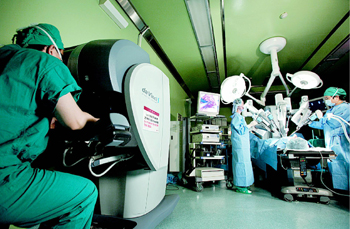
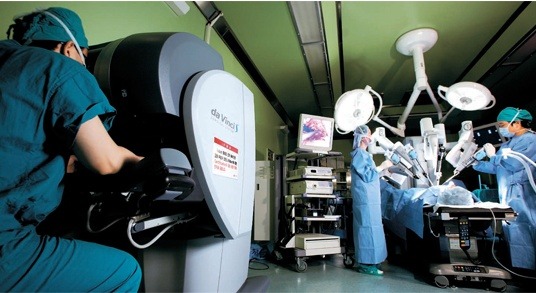
< Sitting aside with the robot called da Vinci, the doctor operates surgery with 3-D screen. The robotic arm is located inside the patient’s body> (Source : Donga News)

He chose Dr. Na, who is well-known to have performed the greatest number of robotic surgeries on prostate cancer in Korea. You will find the reason from the fact that he is the first doctor in Korea who succeeded the robotic surgery in 2005, and also performed about 1,200 surgeries so far. Of course, the result was successful. Dr. Oraz left the hospital with a healthy appearance. Like this, the technology of robotic surgery has achieved recognition throughout the world. You will be surprised to know that many doctors around the world such as U.S., Singapore, Italy, and France visited Korea to learn how to perform the robotic surgery, even paying tuition.

What is da Vinci Robotic Surgery?
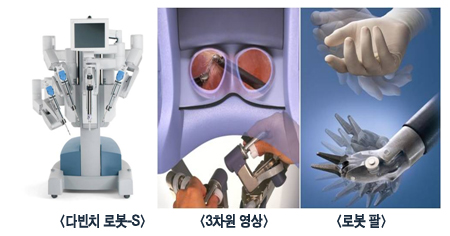
da Vinci Robot>(Source : The Center of da Vinci Robot Surgery, Hallym University Kangnam Sacred Heart Hospital)

The robotic surgery was first brought in Korea in 2005 by the Severance Hospital, and since then, it was applied in an operation room. What is the procedure of the surgery? The patient gets general anesthesia like the other surgeries. And then, the robot’s arm is inserted into the abdominal cavity of the patient after injecting the gas and inserting the port into the patients’ abdominal cavity. After then, the doctor pricks several holes for putting robotic arm and camera into his patients. Next, he controls the robot with the exactly same hand movements like he did in the real surgery, watching the 3-D screen that helps doctors take a closer look at the affected area of patient, which is absolutely beyond the human hands.

In particular, the da Vinci robotic surgery is useful to cure some cancer that might bring about a severe side effect and complications when its surrounding nerves and blood vessel are damaged, such as the prostate cancer, rectal cancer, esophageal cancer, and bladder cancer. It is indeed an effective surgery.

Oriental medicine to the world

Korea International Cooperation Agency(KOICA) and the city of Almaty, Kazakhstan made an agreement to establish the Korea-Kazakhstan friendship hospital in 2000. At that time, KOICA used to send doctors and volunteers to the department of internal medicine, dentist, clinical pathology, oriental medicine, and other various fields. Now, the city of Almaty is running the entire hospital according to the further agreement.
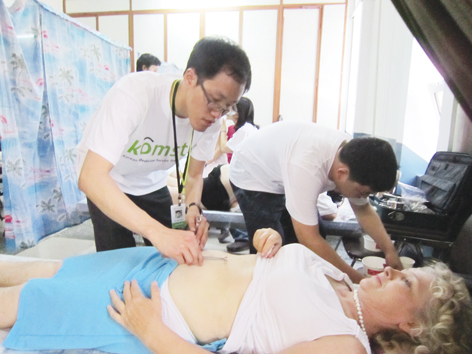


(Source : Akomnews)

Well, there is more. The Korean Medicine Service Team Abroad (KOMSTA) also performed the medical services to 1,000 residents and Korean-Kazakhstan who live in poor medical surroundings. Through the wonderful Korean traditional medical treatment such as acupuncture, moxa cautery, cupping, and oriental medicine in Kazakhstan where 100,000 Korean-Kazakhstan live, we hope that we delivered a pride to Korean-Kazakhstan, and health to those residents. Also we believe that people in Kazakhstan would have more expectations and demands to Korean traditional treatment in the future.

Recently, Korea Institute of Oriental Medicine hosted the training program on ‘Modernization of Korean traditional medicine’ from April 15 to 29 for two weeks targeting the world health care experts. The program is one of the training programs that Korea International Cooperation Agency(KOICA) offered, and in this program, total 14 foreign health care experts from 11 countries of Asia, Central and South America, and Africa, such as Cambodia, Ethiopia, Ghana, Kazakhstan, Laos, Nigeria, Sri Lanka and etc. It will be a great opportunity for the world health care experts to get handful of experience on the Korean traditional medical treatment.

Monday, May 2, 2011

若要佛法興,唯有僧讚僧

馬佛總永久名譽顧問釋寂晃長老涅磐,於4月20日在新加坡逝世,其靈體過後被運送至他創辦的芙蓉妙應寺。長老這一生就以佛法和醫療來度一切苦難眾生。長老一生,刻苦自勵,自奉甚儉,而且待人十分寬厚,時時不忘廣修福慧,廣結善緣。

小时后住在芙蓉昌隆花园妙应寺斜坡下,原来那里有这么一位佛教长老,失敬失敬。愿釋寂晃长老早日登极乐世界。

学到了一句"若要佛法興,唯有僧讚僧”...今天起要学会赞美友族,国家才会兴旺,当然前提是各自要做好本份。

要知道更多故事,请到星洲日报网页

Monday, March 7, 2011

Kim Nam-Joo, the Queen of Reversals, Throws Herself into ‘Concept Korea’ with Enthusiasm

Article picked from http://blog.naver.com/korea_brand/10104143648

Kim Nam-Joo, Throws Herself into ‘Concept Korea' with Enthusiasm Know Korea / Know Korea

2011/02/28 16:20

복사http://blog.naver.com/korea_brand/10104143648

The third Concept Korea will be held at the David Rubenstein Atrium, Lincoln Center, New York on the coming 15th (local time). The event takes place during the New York Fashion Week season featuring four groups of designers from Korea sponsored by the Korean government to represent the exceptional fashions of Korea. As an upgraded version of the past two Concept Koreas, this time a wide range of additional events supporting promotion will be offered.

New York Fashion Week is one of the four major international fashion collections leading the world fashion industry. It is more a commercial-oriented fashion show, featuring merchandisable fashion to lead the market than boldly experimenting with trends. This year the week runs from February 10th to 17th at the Lincoln Center; and ‘CONCEPT KOREA, Cultural Treasures 2011’ brings the fashion designs of Korea to the international stage, where all leading figures of the fashion market gather to enjoy the season. The project, accompanying various promotional marketing activities, is sponsored by the Republic of Korean Ministry of Culture, Sports and Tourism (MCST), Daegu Metropolitan City, the Korea Creative Content Agency (KOCCA), and the Korean Research Institute for Fashion Industry (KRIFI) to advance the Korean fashion industry into the world market.

(photo: Naver blog)

When such efforts can successfully support Korean designers to create global brands joining the international fashion market with other world-renowned labels, the national competitiveness of Korea can be enhanced while acknowledged for its original fashion trends. Promotion is necessary for those talented designers to join the market; however it is difficult for many full-time designers to put much effort into marketing and promotion. Thus with support from government and private sectors, the Korean fashion can move a step closer to win more opportunities introducing its original trend of fashion to the world.

Indigo blue spreads into New York

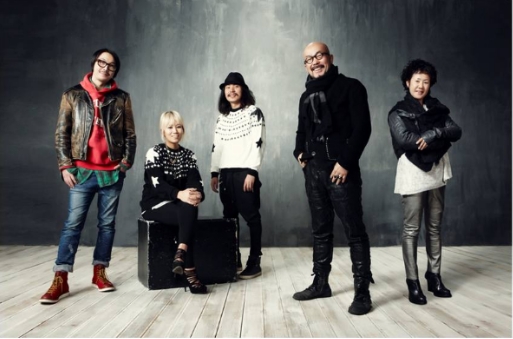
Lie Sang Bong, and DO HO (from left to right)>

This year’s theme for Concept Korea is ‘Cultural Treasures,’ planning to feature designs inspired by traditional Korean cultures by four designer groups, DO HO, Lie Snag Bong, Steve J & Yoni P and Choi Bum Suk. The profound and mysterious indigo blue of the celadon porcelain will be transferred to the garments and the showroom portraying the graceful sensibilities of Korea. The indigo of the celadon may enchant the eyes of the West with its elegant and sophisticated beauty from the East, Korea.

The designers have prepared about forty pieces of work for the collection and the Concept Korea staffs prepared additional events to better promote Korean culture. This was planned from feedbacks on the past two Concept Koreas, which did not fully explore the resources and opportunities ending the event with a single show.

(photo: Naver blog)

After the forty-minute length fashion show, a list of interesting events with reception introducing Korean food, music, performance, and IT is held. Visitors can relax and get better understandings on Korea while enjoying fusion Korean food provided as part of the ‘Taste of Korea’ project led by the Korean Ministry of Food, Agriculture, Forestry and Fisheries. An internationally recognized chef Tom Colicchio has prepared a special fusion Korean dish and makgeolli (Korean rice wine) for this occasion expected to attract more attention from the Western people.

Reaching out for new business opportunities

As the primary mission of the event is for the Korean fashion industry to enter the global market, a room showcasing the collections for potential business partners was arranged. In Chelsea Meatpacking district a public showroom was set up for ten days starting from February 14th to 23rd. Here the four designer groups from Korea shows each fifty pieces of their design welcoming foreign buyers. Especially, bringing Korea’s IT technology to the space, the showroom is ready to surprise the visitors and buyers from the entrance spot winning local attention among other designers participating the New York Fashion Week.

National and international promotion is a significant key to win success paying back the long efforts put into. Kim Nam-Joo, the Korean fashion icon celebrity was commissioned as honorary ambassador for Concept Korea Ⅲ and fashion magazines including Vogue, Elle, Harper’s Bazaar and influential American presses such as CNN, New York Times, New York Daily News will report the third Concept Korea stage.

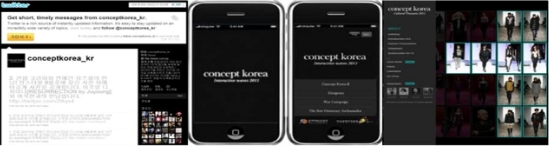
Smart Phone applications providing information on Concept Korea Ⅲ will be distributed and SNS marketing will be actively developed. Twitter and Facebook contents (serviced in English) and appointed fashion reporters will introduce the New York fashion week agenda, events and selected designers followed by additional services. Thanks to such supports you would be well informed about the show without a need to fly to New York.

Let’s hope the fashion show to end as a great success promoting talented Korean designers on world stage and further work as a stepping stone for the Korean fashion industry advancing into the international market.

We sell Korean ‘Jeong’ (정) to the world

Article picked from http://blog.naver.com/korea_brand/10104141935

We sell Korean ‘Jeong’ (정) to the world Know Korea / Know Korea

2011/02/28 15:55

복사http://blog.naver.com/korea_brand/10104141935

Korean corporations, which have been key players in the Korean economy, are now taking a prominent role in nongovernmental diplomacy. The works vary from eradication of poverty and hunger to establishment of schools and libraries. These projects are not the one-off event, but very substantial and specific aid since they involve the interaction with local people and keep providing them with services, which are urgent. Here are some aspects of ‘Affectionate Korea’ in the world.


‘Springtime of my hometown’, a Korean children’s song echoed in Indonesia

A familiar song is heard from Elementary School Menteng in Jakarta, Indonesia. Indonesian students sing a Korean children’s song ‘Springtime of my hometown’ to the piano accompaniment. It sounds strange to hear a song sung in Korean at a local school of Indonesia not at Korean schools.


(Photo: Korea Land Daily)

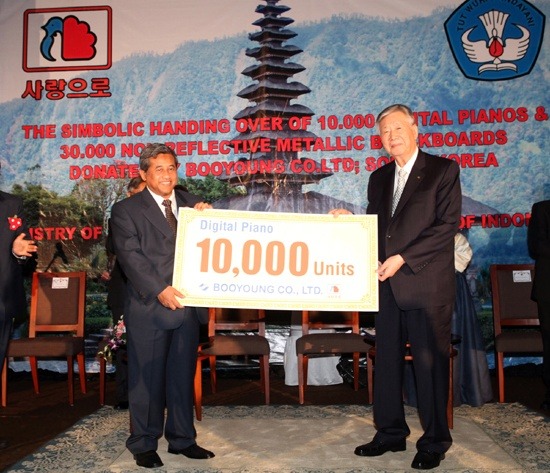
It is because Booyoung Co., Ltd., a construction company of Korea, donated 10,000 digital pianos and 30,000 blackboards to the ministry of education in Indonesia last month. Moreover, Korean ‘Graduation song’ (Lyrics: Yoon Suk-joong, Song: Jeong Soon-chul) is translated into Indonesian and saved in all of the digital piano for the Indonesian students since there is no song for graduation ceremony in some countries of the South East Asia. The song will be played during the graduation ceremony in this June.

In addition, there are popular Korean folksongs and children‘s songs contained in the digital piano. They are recorded in Korean, not in the local languages, and thus the students of Elementary School Menteng could learn not only the songs but also Korean, which contributes to making the music class more interesting.

Booyoung Co., Ltd. has established approximately 600 elementary schools in the South East Asia such as Vietnam, Cambodia, Laos, Thailand, East Timor, Malaysia and Sri Lanka so far and plans to expand the support into the Philippines, Myanmar, even Australia and New Zealand. Lee Joong-keun, the chairman of Booyoung said “we hope the donation of digital piano could encourage cultural exchanges and promote amity between Korean and Indonesia” and “we will strive to support the educational environment in addition to cultural exchanges so that students could keep pursuing their studies”, he added. The kind-hearted contribution of a company enables children to keep studying and dreaming.

1.5-ton truck conveying ‘Ghanaian children’s dream’

On 11th November 2010 the school of Oduponkpehe in Awutu Senya district, which is approximately 25 km away from Accra, the capital city of Ghana, was in a festive mood from the morning. It was the day when the inaugural ceremony of the children’s library and mobile library for children in rural areas was held.

The library of the school of Oduponkpehe renovated from the 82.5㎡ interior has about 3,500 books including children’s books, reference books for English, mathematics, and computer.

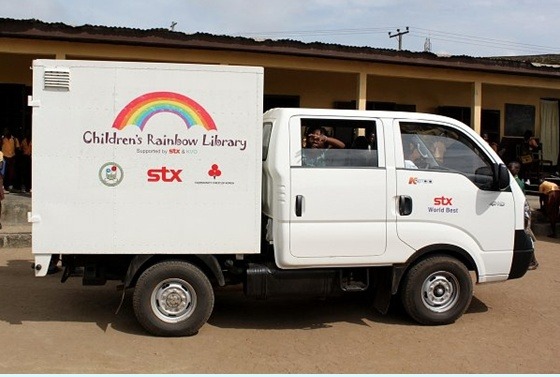
It is remodelled from a 1.5-ton truck>

In the urban areas of Ghana the standard of living is generally good and the accessibility to library is quite easy while in the rural areas the book distribution rate is very low due to the poor condition of road and transportation on top of a small number of libraries. The mobile library system is introduced to resolve this problem and the library of the school of Oduponkpehe will take a pivotal role in the system. The mobile library remodelled from a 1.5-ton truck will visit 24 schools in the rural areas including Koforidua and Kumasi as well as the capital city, Accra and provide service for 27,000 children from low-income families. Not only does it lend books but also organises various programmes such as book report contest.

Establishment of the children’s library and mobile library in Ghana is a part of the global contribution projects carried out by a Korean company, STX Corporation. STX Corporation is leading to cultivate talented international students through establishing libraries for children from multi-cultural families in Korea, and awarding a scholarship of 3 million Chinese yuan to honour students from 5 universities in 3 provinces of Northeast China. STX Corporation hopes to contribute to the long-term advancement of Korea by means of education.

Have you heard of ‘Lotte School’?

Lotte Department Store has transformed Son Ky middle school in the remote area of Vietnam after the 15-month renovation work. That is why the villagers call it ‘Lotte School’.

Hyundai Motor is promoting an environmental project, ‘Hyundai Green Zone’, which aims for reforestation of desert areas in China. The first target is Chakanor area within the Kunshantag desert in Inner Mongolia, China. The area is gradually losing pasture and turning into the salt desert due to desertification and strong alkaline soil. To prevent this process, Hyundai Motor plans to create a large scale of grassland by 2012, seeding indigenous plants that grow well on the alkaline soil.

Korean corporations would like to be a sincere friend to the world, delivering heart-warming ‘Jeong’ through their international Corporate Social Responsibility (CSR) activities.


Friday, February 25, 2011

Free Medical Service in Korea for Foreigner (Including air ticket)

Article approved and picked from http://blog.naver.com/korea_brand/10103162253

The Medical Service Project Shares New Life and Hope! Know Korea / Know Korea

2011/02/15 09:42

복사http://blog.naver.com/korea_brand/10103162253

Do you know much about the congenital heart disease? The disease is due to abnormal heart development before birth that requires postnatal medical treatment. It may lead to premature death if no appropriate surgery is operated, however a successful surgery can grant a new healthy life to a child.

Regrettably, there are many people who are in need of medical surgery but not all receive the opportune treatment. The high costs and lack of professional medical hospitals are doubling the burden. Fortunately, movements of medical support for the global neighborhood have been started, the ‘Korea Medical Service Share Project’ being one of them.

The Korean government financially supports children of neighboring undeveloped regions suffering from the lack of medical facilities by paying all expenses on their visit to Korea for medical treatment; Private medical institutions support the medical expenses by offering voluntary surgical operations. This year’s first patient is Danilya, a young boy from Russia.

A new life to a six-year-boy Danilya

The level of medical treatment of Korea is well recognized on the international level. The number of foreigners visiting Korea for medical surgery or treatment is increasing and every year new surgery method of Korea and its successful cases are introduced overseas.
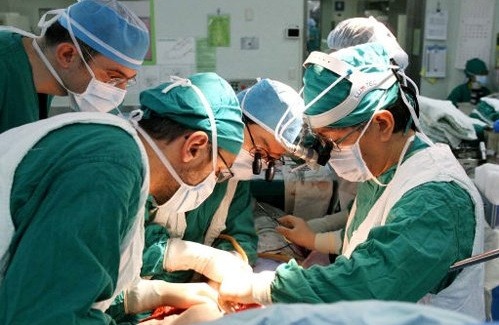
The Korean Ministry of Health and Welfare has developed a project to position Korea as a global healthcare leader and promote voluntary services overseas.

The project is significant for being a public-private collaboration case while the Korean government provides financial aids covering flight fees and expenses during the stay and medical institutions covers the medical expenses. This year’s budget is 250,000,000 Korean won, which will be used to cure fifteen patients from the neighbors of Korea including China, Russia, Kazakhstan and so on.

Danilya, a six-year-old boy from Havarovsk, Russia was the first patient to meet the Korea Medical Service Share Project. Danilya was diagnosed as congenial heart disease and ventricular septal defect however the family could not afford a surgery and in fact no hospitals specializing in heart disease could be found near the village. It was grateful to receive Irina’s - the mother’s joy and appreciation when she heard the good news from Korea about the medical and financial support.

Sejong Hospital, specializing in heart disease, was responsible for the young boy’s surgery this time. The hospital has conducted about 900 free medical operations for children from twenty nations including Russia, China, Vietnam, and Iraq for the last twenty-nine years bringing new life to them. The hospital explains that it is time for Korea to give back the help it has received from their neighbors in the past and this medical service project could be one example of it.

Sharing the advanced medical technology of Korea with Russia

conducted by Korean surgeons at major Hospitals of Korea>

The operation process of Danilya was covered by RTR, the Russian public broadcasting media and will be broadcasted across Russia in March. ‘Pulse,’ RTR’s self-produced medical documentary program that usually deals with new trends in the medical field e.g. modern medical science, diagnosis and diverse diseases, and new medical treatments, will feature the story on Danilya in three parts. This may as well be a good opportunity for Korea to introduce its advanced medical technology.

In fact, RTR did not only take report of Danilya’s surgery but also covered the current medical technology for cancer, cardiac and vascular diseases, oriental medicine, brain and spine treatment of Korea in depth, introducing the excellence of Korean medical technology.

to a patient that will work as a real arm> (photo: The Joongang Daily)

The Korea Medical Service Share Project will actively continue to support the young patients of China, Kazakhstan and so on. ‘Medical Korea,’ a medical institution to operate free surgery, will be established and promoted through the local media. ‘Global Medical Service Share Corps’ program supported by Hanlyu celebrities will be carried out as well. We expect the project would gradually expand its activity reaching out to more regions and covering more diseases to be cured.

The project embraces the idea of coexistence and the global community. It is grateful for both, Korea who can be help and its neighbors who calls for help – the young children suffering from illness, and the parents who need support to afford medical treatment. A better global community can be upheld by being help for those who need a hand, and this project can be one way to practice the idea. We hope to see more medical institutions willing to donate their excellence in medical technology to bring new lives to our neighbors.

Korean Mushrooms Occupies the Tables of the Swiss

Article approved and picked from http://blog.naver.com/korea_brand/10103162079

Korean Mushrooms Occupies the Tables of the Swiss Know Korea / Know Korea

2011/02/15 09:37

복사http://blog.naver.com/korea_brand/10103162079

The superior species and high production quality of Korean mushroom is proved through its great texture and taste, already having been renown overseas. Today Korean mushrooms have attracted the Swiss people being one of their favorite dishes.

Korean mushrooms spotlighted as high-quality food

Jelomli, a grand department store of Zurich, the largest city in Swiss has Korean mushrooms on their sales list, sold at the lower ground grocery section, along with a variety of other raw mushrooms. Here Korean king oyster mushrooms are sold by 30-40 franc per kilogram, quite expensive which is equivalent to 35,000 ~ 47,000 won in Korean dollars.

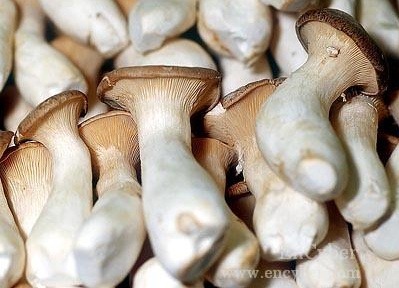
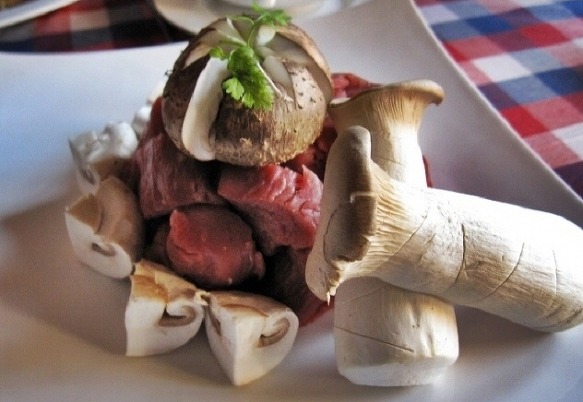
Swiss people, on sunny days, often enjoy barbeque parties with their family and friends sharing grilled meat and sausages, and the Korean king oyster mushrooms as the only vegetable to be added on the main grill list. Taken as a high-quality food item, the king oyster mushrooms are enjoyed for its bigger size and thick texture that is much suitable for a grill party compared to button mushrooms.

In Swiss, now it is not that difficult to meet these mushrooms from Korea in Swiss as they are not only supplied to department stores but also to Migros, the largest supermarket franchise in Swiss.

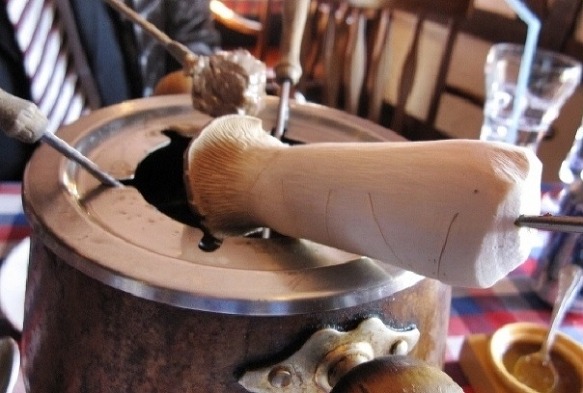
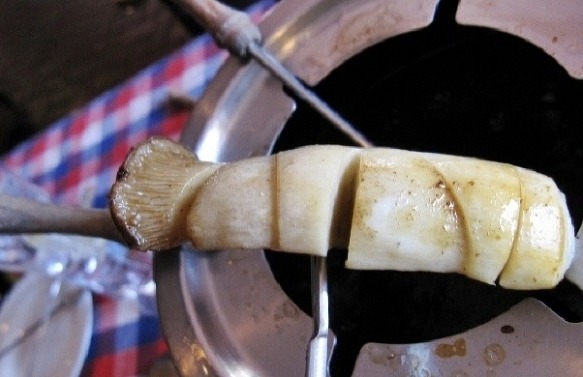
a Swiss restaurant in Itaewon, Korea> (Photo: Naver blog)

In Swiss, mushrooms are widely enjoyed by the people being one of the most popular food often used as an ingredient for sauces or even as main dishes. Regarding the sales of button mushrooms the amount of its consumption are 13,000 tons annually; 8,000 tons of raw mushrooms and 5,000 tons of cooked mushrooms. Here 7,000 tons of raw mushrooms are produced in Swiss and the import! rate of the total market consists of 15 percent. The Swiss people do seem to favor mushrooms a lot!

Cannot imagine a life without mushrooms!

The Swiss people in love with mushrooms

Even the economic crisis did not stop the Swiss fondness for mushrooms. In the second half of 2008 when the economic situation was not favorable, consumers did not cease to spend money on mushrooms. In 2009, rather the total consumption increased adding 300 tons compared to the former year. In fact, the fastidious Swiss customers looking for the best qualities seem to continuously increase the needs for fresh mushrooms.


Button mushroom is the most largely produced and consumed one in Swiss, which is a very traditional kind. However, Asian kinds started to receive attention along with the rising popularity of foreign mushroom species. These days foreign mushrooms that have been introduced during the 1980~1990s including shiitake, king oyster mushroom, grifola frondosa are now receiving some spotlight. Especially shiitake is enjoying popularity being ranked second in the consumer preference.

It may be no surprise that Korean mushrooms with high quality and taste has successfully created its market in Swiss. It had past 3~4 years since Korean king oyster mushrooms joined the dishes of the Swiss dining table.
Now the annual amount of mushroom import!s are over two hundred million Korean won. This was possible by both continuous efforts put to improving species and through quality control.

In 2009 renowned chefs from all over the world have visited Korea to participate in the ‘Amazing Korean Table,’ and Korean mushroom was used by all chefs. A variety of mushrooms were grilled or slightly boiled to be used as ingredients or become the main dish itself.

The taste and flavor of Korea mushrooms seems to prove its real worth no matter where it is. As the Swiss fondness for mushroom continues the future of the Korean mushroom overseas market is expected to be positive; we hope to create a broader international market, in addition to Swiss, for all consumers who want high quality mushrooms.

Sunday, January 16, 2011

Haenyeo 海女

Article picked from http://blog.naver.com/korea_brand/10097438137

Hopefully AirAsia will open a new route to Jeju Island after its successful Seoul - KL route launched since last September.

Korea’s Women of the Sea (Haenyeo) Know Korea / Know Korea

2010/11/12 13:12

복사http://blog.naver.com/korea_brand/10097438137

The no. 1 search word related to Jeju Island of Korea is hands down the “Ollegil (Olle Road).” Just thinking about taking a walk on Ollegil, especially in the autumn with all this beautiful foliage, lifts one’s mood.

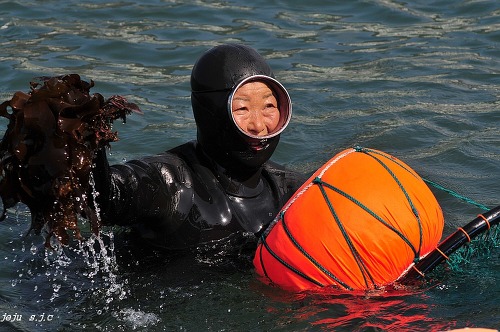
Some while ago, though, before Ollegil came to be such a hot tourist spot, the first thing that came to one’s head thinking about Jeju used to be the “haenyeo,” the sea women; they are female divers in the Korean province of Jeju.

The women born in Jeju had to earn a living either by farming crops or picking sea products. The haenyeo often represents a harsh and strenuous life.

What used to amount to as many as 15,000 haenyeo in 1970 has now plummeted down to a mere third of that number; and most of them are over seventy years of age at that, meaning that haenyeo are fast disappearing.

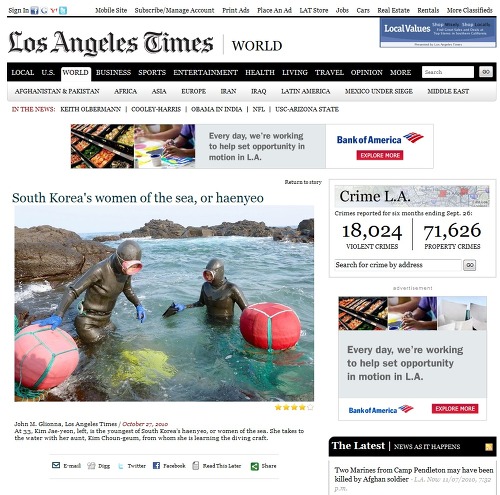
In light of this sad reality, The LA Times published a feature article on Korean haenyeo, their traditions and current situations.


Haenyeo, Epitome of Toughness

The haenyeo is assumed to have first appeared in the primeval! era when people started turning to the sea for food. It goes similar for the haenyeo of Jeju as well, based upon the age of the shrines on the island built for the safety of fishermen and haenyeo. There are several ancient proverbs and old sayings as well that describe Jeju haenyeo’s physical strength and their tough lifestyle.

The LA Times introduced the life of Jeju haenyeo in its front page, including in-person interviews that actually took place on the island.

The LA Times Illustrates Korea’s Old Tradition

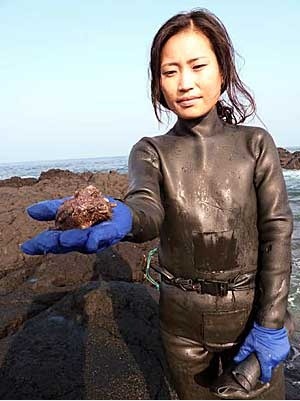
The article of The LA Times, one of the five major newspapers of the U.S, featured the youngest Jeju haenyeo in Korea under the title “Korean island women carry on diving tradition.” The well-researched numbers and figures in the article point to the fact that the number of haenyeo is decreasing rapidly today in Korea.

The daughters who are handed down the know-how of sea-diving from their mothers (e.g. how to avoid sharks and how to hold breath and stay underwater for a long time) are turning elsewhere for other possibilities of living. Although it is true that not many women are obligated to choose the harsh life of haenyeo nowadays, there still are mothers who take pride in that particular calling, and with that calling, having brought up good daughters.

A Korean newspaper once covered the story of a 69-year-old woman who still hasn’t let go of the life of a haenyeo. She started sea-diving at the age of 11, tutored by her mother, and has since lived with and in the sea for 58 years. She says she still goes out to the sea about ten times a month and proudly adds that she has raised a son and four daughters.

Not for Money, But To Keep a Tradition Alive

The LA Times article contains an interview of the youngest haenyeo, Ms. Jae-Yeon Kim, who is 33 years old. Ms. Kim says she learns to become a haenyeo not to make money but because it connects her to her ancestors. She must learn all there is to learn about sea-diving before the elder haenyeos pass away so that sometime in the future she will be able to pass down the skills and the know-how.

The article, while praising Ms. Kim’s courage in having chosen a lifestyle of such harshness in order to keep a tradition alive, emphasizes the need on a more national level for preserving the traditions of haenyeo. The value and significance of that age-long calling is priceless.