Showing posts with label Interesting place. Show all posts

Tuesday, October 4, 2011

Fall Foliage Trip to the South

Article picked from
http://blog.naver.com/korea_brand/10120391749

Starting from the North to the South, whole place is changing its color as it gets closer to the end of autumn. Autumn leaves turn red when the weather gets cold, so mountainous Gangwon-do become the first place of autumn leaves. When you look down from the sky, leaves descend to the South and finally stop at Jeju island.

Shall we move on to the South?

Foliage Trip to Mt.Palgong

Mt.Palgong, which is located in Daegu, is always popular among many people. You don’t need to spend much time and money to enjoy the autumn leaves. The mountain is said to be the most beautiful in late October.

Trip to autumn leaves starts at the entry to the Mt.Palgong. 1,300 gingko trees are lined up along six kilometer long road between Gongsan tunnel and School, which is very popular car driving course. Going down the road after tunnel, you will be amazed at gingko trees. It is fantastic to see golden wave of gingko trees.

When you turn to Dongwha temple at Baekan intersection, you’ll meet the line of gingko trees. After passing by school, you’ll meet maple trees. It is simply beautiful.

Plus, Mt.Palgong belt way is very popular among drivers for the beauty of its maple trees. The whole mountain is full of red color when the fall reaches its peak. You’ll definitely be amazed.
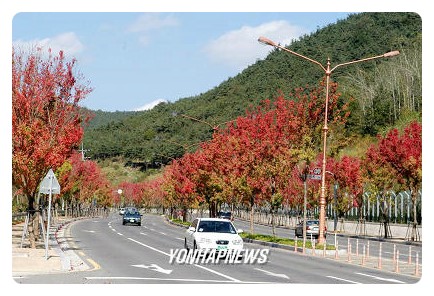

(Source:Yonhap News)

Hiking is the best way to enjoy the autumn of Mt.Palgong. There are many hike ways in the mountain such as Buin temple road, Gatbawi road and Dongwha temple road. Some buddhists pray toward Buddha statue at Gatbawi. This buddha statue was made in Shilla dynasty and became known as praying site for education, health, occupation, and baby boys. Many people come to this site to pray for their own wish every day.

Trekking to the Autumn of Mt.Jiri

Mt.Jiri is the second highest after Mt.Halla of Jeju island. This mountain is huge. There are so many famous and beautiful sites in the mountain. Autumn leaves of this mountain are as beautiful as other mountains.

Autumn leaves start to turn red in late September at Mt.Jiri. It is not well-known but you can enjoy autumn leaves earlier than any others in southern part.

Foliage of Mt.Jiri will start in 5th of October at Cheonwang peak, about 15th at main line, between 20th and 25th at Pia valley and three or four days later than Pia valley at Baemsa valley. If you want to get the most beautiful scenery, you should go up to Cheonwang peak. The most beautiful hike way is between Sesok and Chunwang Peak.

Cho-Sik, a scholar of Joseon dynasty, said “Don’t tell anybody that you’ve seen foliage without seeing the foliage of Pia valley. Foliage of Jikjeon is one of ten beautiful sceneries in Mt.Jiri. Pia Valley is famous for hike way of foliage. Foliage hiking in Pia valley starts at Seongsamjae and continues to Nogodan and descends to Pia valley or moves forward to Baemsa valley. This hike way has so beautiful scenery that many people take this way.

Foliage in Baemsa valley is as beautiful as Pia valley. Pia valley is famous for foliage whereas Baemsa valley is famous for valley itself. Baemsa valley is nine kilometer long and colorful leaves harmonize with that valley. Foliage spreading from Banseon complex to Ganjangso is regarded as the most beautiful scenery in Baemsa valley.
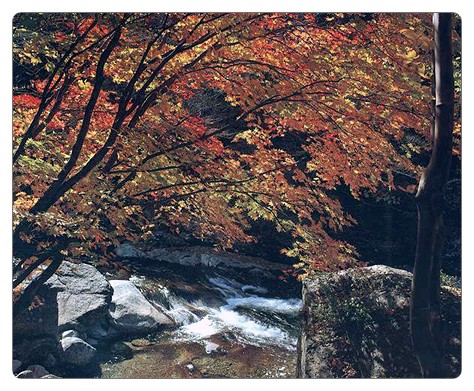


(Source: Korea Tourism Organization)

There are some other foliage sites to see in Mt.Jiri. Various hike ways have been developed since long time ago. Shall we take a trip to Mt.Jiri?

Mt.Dyuryun, the Harmony of a thousand years history and the beauty of the Mountain

Duryun mountain, which is located at the southernmost peninsula, is full of evergreen broadleaf and deciduous broadleaf. There are some national treasures such as Daedun temple, Pyochung temple, the bell of Tapsan temple and so on.

Duryun mountain is well known for camelia and foliage. The valley is two kilometers long from the group facilities complex to the temple. The latest foliage, regarded as one of the most beautiful autumn scenery, can be seen there.
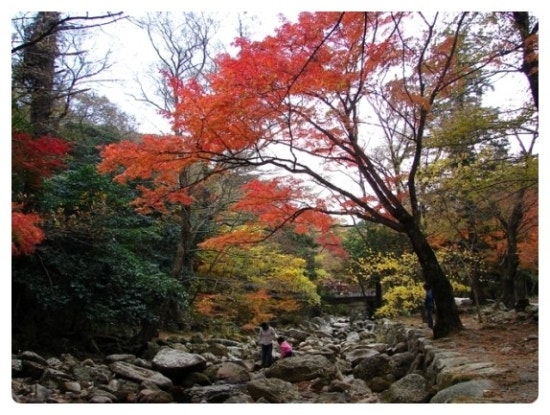


(Source:Daeheung Temple Wesite)

The best scenery of this mountain is a maple tree forest of the way to Daehung temple. Take a walk through the temple gate. You’ll refresh yourself. Maple forests and camellia can be seen. Trees are like tunnel. When you cross a bridge, there is tunnel of maple trees.

Let’s walk through the yellow and red gingko trees and maple forest and keep going up along the car road. Mountain is covered up with yellow and red wave. Crossing valley and bridge, you’ll meet Youseondang and backdrop of foliage which are the highlight of the journey. The last of the journey is the road up to Daehung temple.

Maple Leaves of Mt.Halla, the Southernmost of Korea

Foliage of Mt.Halla in Jeju island is not as well known as other sites. The famous sites are Wanggwanneung, Mansae hill, road between Youngsil rest area and Byeongpung rock area, road 1100 and 516. In particular, uniquely shaped 500 rock pillars stand at Youngsil rest area and Byeongpung rock area. The area is probably the most beautiful site.

Youngsil of Mt.Hallan is easy to access for all walks of life. Youngsil course starts at pavilion. Road to Youngsil is flat, however, the pine trees and maple forests along the road will lead you to the unique landscape. Walking a little further up, you can have good scenery of foliage. Maple forest starting under the Byeongpung rocks continues to gate of the hike way. It is magnificent.

Another joy of Jeju trip. If you have a plan to go to Mt.Halla, do not miss autumn foliage in Youngsil.
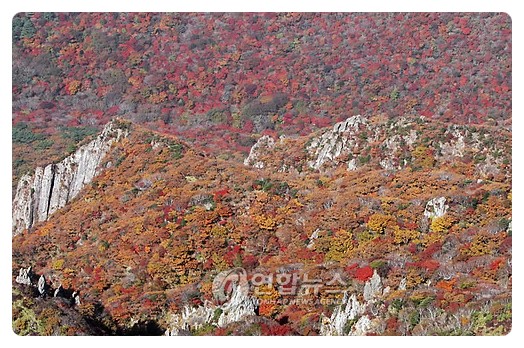

(Source: Yonhap News)

How was the journey? Autumn is right at the corner. Shall we take a walk and breathe in the forest of autumn foliage?

Friday, September 16, 2011

Journey of Literature

Journey of Literature Know Korea / Know Korea

2011/09/15 17:30

복사http://blog.naver.com/korea_brand/10118744271

Journey of Literature

For centuries, novels entered our life and truly touched our heart. No matter when and where it was written, the great novel transcends the time and space, attracting thousands of readers all over the countries.

The reason we feel close to those novels is that the author used the real backgrounds and era, many of which were from their experiences. So, that’s why you feel it real when you visit the place of the novel. Let’s go into the background of great novels.

Hometown of ‘When Buck Wheat Flower is in Blossom’

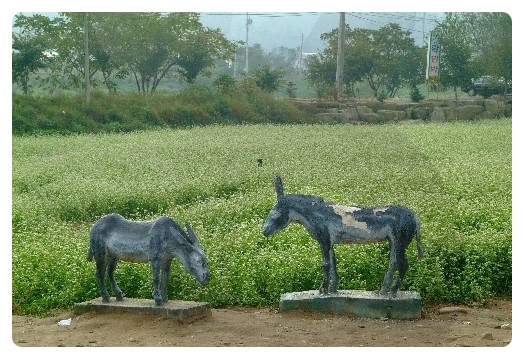
Bongpyeong, which is in Pyeongchang, Gangwon-do, is the background of ‘When Buck Wheat Flower is in Blossom’ and also the hometown of the author, Lee Hyo-seok. Designated as the first cultural village in 1990, this village is full of buck wheat flowers. Tourists stop by to see the mill and the bridge that appeared on the story.

There are many places reminding ‘When Buck Wheat is in Blossom’ in Bongpyeong. Firstly, let’s go to Lee Hyo-seok Culture Center. You will see everything from his life to work.

It displays his medals, remains, first published book, translated copies in English and Japanese, magazines and newspapers introducing his works. In addition, you can take a walk in a garden of literature, buck wheat flower road, and a small path.

You will find Lee’s birth place nearby. In his early years, it was a thatched-roof house, but later it was changed into a house with galvanized iron roofing during nation developing project,Saemaeul Movement and then into tile roofing. Fortunately, Pyeongchang-gun restored his house to the original one in 2007. The farming tools on the walls will make you feel being in the past.

<Bongpyeong, hometown of a renowned novel, ‘When Buck Wheat Flower is in Blossom’> (Source: Korea Tourism Organization)

Not far away from here, there is Gasan Park for commemorating him. Chungju pub was built nearby and his statue and the monument were placed in a sculpture square. Getting out of the park and crossing the Seob Bridge, Bongpyeong traditional market will be waiting for you. Every scene in the novel will be alive in front of you.

Pyeongchang has held Hyoseok Writing Contest since 1971 with respect to Lee Hyo-seokand his achievement. Soon after, in 1999, it was expanded to Hyo-seok Culture Festival so that everyone can participate. Every mid-September, tourists come to the festival. The themes of the festival are affection from novel, fragrance of nature, nostalgia of tradition.

Why don’t you go to Bongpyeong and see heartbreaking sceneries of all mountains and buck wheat?

Journey to ‘Eight Sceneries of Gwandong Region’

If you are Korean, you might remember this one. ‘Gwandongbyulgok’, a travel story. The lyrics used to appear in a textbook and a school exam. It is about a newly appointed governor,Jeongcheol’s impression on the beauty of Gangwon-do. He praises the breathtaking scenery of Mt. Geumgang and then tells what Chongseok pavilion and Samil beach are like from the east coast. The story continues as he headed to Euisang pavilion in Yangyang.


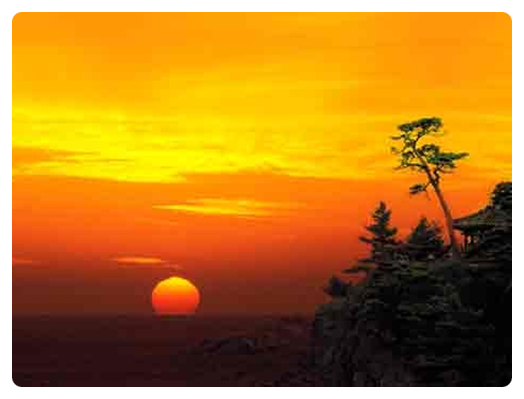
Euisang Pavilion> (Source: Korea Tourism Organization)

Naksan temple was founded by Buddhist priest, Euisang, in a reign of King Munmu. It is regarded as one of the three major Gwaneum temples. There is a legend that Euisang met Buddha Gwaneum at Naksan. Euisang pavilion is located on the cliff near the ocean. There are old pine tree named ‘Gwaneum’ around and a statue of Buddha Gwaneum on the hill.

East Sea seen from Euisang pavilion has many beautiful rocks and blue ocean. A lot of people come to see the sunrise like Jeongcheol described.

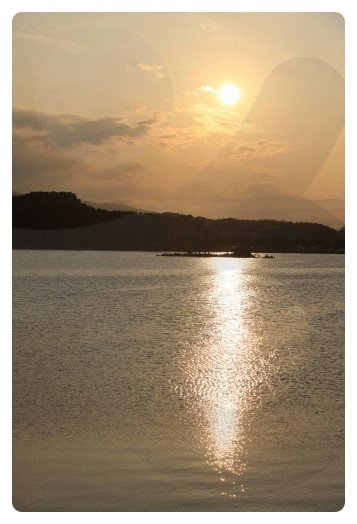
Finally, Jeongcheol arrived at Lake Gyeongpo where the fresh water and the ocean meet together. The lake was formed as the sand accumulated and eventually blocked the water route.

For that reason, the area got to have a beautiful soft sand beach, eastern coast and wide lake. Everyone easily forget how time flies when they face the wind breeze and appreciate the view from pavilion. Indeed, they are the truly magnificent sceneries.

Gyeongpo> (Source: Korea Tourism Organization)

Now, let’s go to the south. Nearby a beautiful river of Samcheok, there is Jukseoroo. Unlike the other Gwandong pavilions located around coast, this pavilion is on the cliff, which is special. Next, Jeongcheol arrived at Mangyang pavilion, which he chose as the last destination of his journey. At the end of the journey, Jeongcheol stood there and encouraged himself for coming future. The pavilion located on the most southern part of Korea received the sign board that says ‘Gwandongjaeillu’ from King Sukjong, which means the best pavilion in Gwandongarea. If you look at the ocean from there, you will understand why.

From September to October would be the perfect season to enjoy the full view of East Sea. If you love the ocean and car driving, this journey is the one you would love.

The Journey to Beolgyo, Site of Novel ‘Taebaksanmaek’

The novel ‘Taebaeksanmaek’ is considered one of the best sagas which deal with modern history of Korea. The story is about before-and-after war and the people. Since it is said that the novel would be dramatized, Bosung-gun Bulgyo, Jeollanam-do, the background of it, started to rise as a tourist attraction.

Bulgyo is the most crucial background of the novel. Still, it is an important place where the ocean and river meets together, and a traffic hub connecting Goheung, Bosung andSuncheon, which brings in many people.

All the mountains and fields are the background of ‘Taebaeksanmaek’, such as Baekdong village, Chudong Resovoir, Woeseo and Nakan. The railway, mountain valley, Rich family,Hyun’s mansion, Hong Bridge, small church and embankment which appeared in novel are still well preserved.

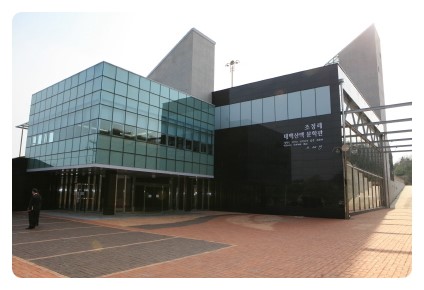
Jo Jeong-rae Taebaeksanmaek> (Source: Korea Tourism Organization)

If you see the area surrounded by mountains, you will recognize the place is just perfect to present the era of disturbance.

The literature center is near Sohwa’s house of the novel. It displays author’s notebook, camera and six-years of written note of writer Jo Jeong-rae which is taller than a grown-up man. The center also became famous since the novel got popular.

There are many places which were mentioned in the novel. Why don’t we go to Beolgyo to feel the great literature and the era of Korea?

Just for reading this, I think you already started the journey. Only the ones who get to the site of the novels can tell how exciting it is. Also it must be fun to think of how different it would be from what you have imagined of real sites.

Your journey with Korean literature will be more fun after going through the books again. Why don’t you start a trip to find out the sites of your novels?


A Five-Day Market in Jeju

A Five-Day Market in Jeju Know Korea / Know Korea

2011/09/15 17:38

복사http://blog.naver.com/korea_brand/10118744881

A Five-Day Market in Jeju

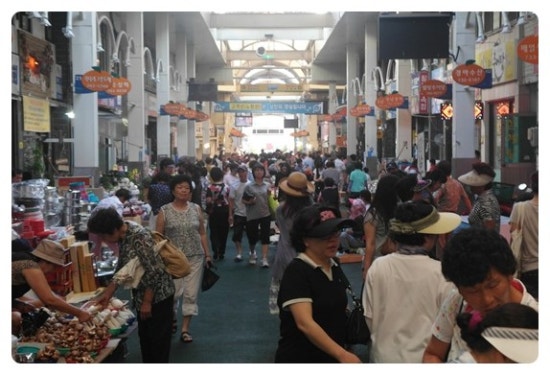
We can figure out culture and customs in traditional markets. I’d like to introduce you a five-day market in Jeju island which presents its own culture and customs.

A five-day market opens five days in a row per month, however, just 40 and 50 years ago, it was nothing but a normal market crowded with people. As time goes by, the market has modernized, but unfortunately nine markets remained so far.

A Five-Day Market in Jeju, History and Tradition

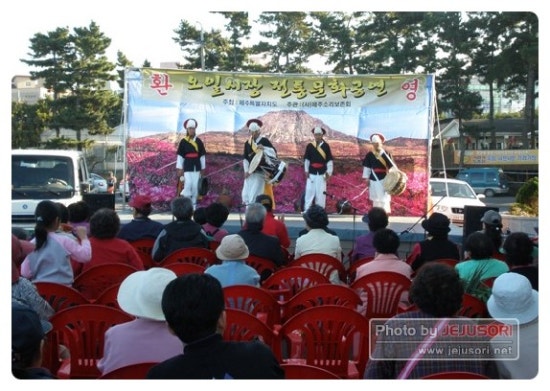
<Maeil Olleh market in Seogypo> (Source: Jeju Sori)

It is not clear from when the five-day market started in Jeju. Academic circles estimate the market started at front yard of Gwandeokjeon in 1910. According to the record, it opened every second and seventh day in lunar calendar. Many items such as crops, clothes and daily necessity were sold or bartered for.

Jeju five-day market has been a driving force to Jeju people and contributed to regional economic growth. The natives say that the biggest markets were the ones that opened near Tapdong and Yongdam. Also, it is said that many people were competitive to get a nice place to sell their items.

(Source: Jeju Sori)

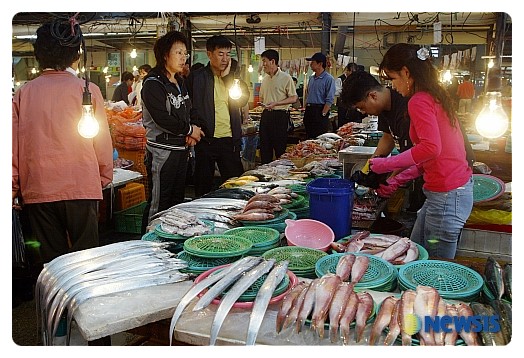
The market is not only for selling and buying products but for communicating with people in town. Every market has its own characteristics. For example, some deal with seafood, others deal with farm products. Currently, it has been modernized and improved for consumers, and delivery and customer call service became common as well. It also has a quality guarantee service. They even provide the arcade for children, stroller, and cart to young mothers to make them feel comfortable while shopping.

Transformed into Cultural Tourism Market

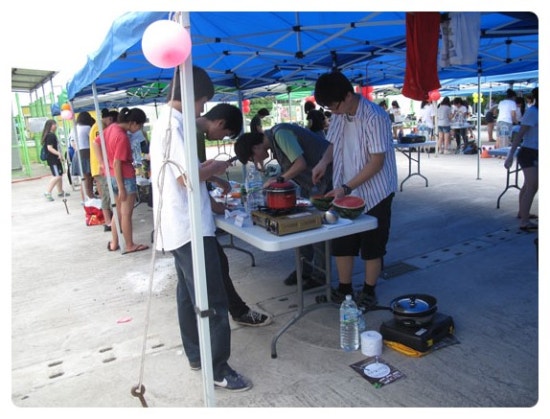
<10,000 won Cuisine Event held in five-day market in Seogypo> (Source: E2news)

Now, the five-day market became very popular with other tourist attractions in Jeju, such as ‘Olleh’ roads. As an effort to boost the economy, Seogypo market changed its name into ‘Olleh’, after then, even people from other local markets visit there for benchmarking.

Actually, Seogypo market was in depression but the atmosphere has been revived since it connected the tour business with the sixth course of Olleh. Moreover, promotion effect has been doubled after the Smalland Medium Business Administration and Market Promotion Center chose the market as one of the “50 traditional markets to go”.

According to Jeju government, the number of visitors per day increased 8,000 from 6,000. Daily sale went up to 80 million won, increasing by 20 million won. Jeju seller association has already registeredMaeil Olleh market as the trademark. With this effort, over 2,000 Olleh hikers visited to the market, which is twice as higher than that of last year.

More than 1,000 government officials and merchants have visited to benchmark Olleh market from all across the country. More Olleh hikers have come to Dongmun market as it became the 18th course of Olleh. Hanlim maeil market is connected to 14th course of Olleh, and Daejung five-day market is connected to 11th course of Olleh. Seogypo Maeil market is designated as the cultural tourism market of the year 2010 and 2011. Seomun market will soon plan to develop other Ollehcourses.

(Source : Newsis)

Meanwhile, a person concerned to the market said that DID (Digital Information Display) will be installed in sixth course of Olleh in order to provide information of food, products, hot sale events in Jeju to all visitors. They expect many of them will come to markets as well.

So, if you want to feel 100% of the culture and custom of Jeju, this is the best season. Don’t forget to bring camera!


Saturday, July 31, 2010

Spend the Summer at the Royal Palace

Article picked from http://blog.naver.com/korea_brand/10091062960

Spend the Summer at the Royal Palace Know Korea / Know Korea

2010/07/28 12:57

복사http://blog.naver.com/korea_brand/10091062960


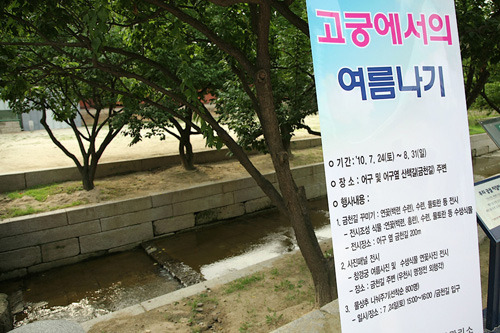
An event titled “Spending the Summer at the Royal Palace” is being held from July 24 through August 31 at Changgyeonggung Palace. Let me introduce it to you.

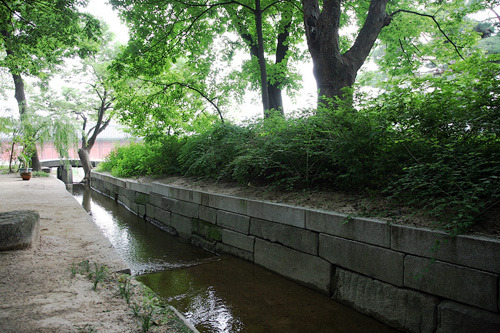
Upon entering the palace you will be able to see a banner in front of euhgoo (a stream flowing from a royal place) that traverses the palace.


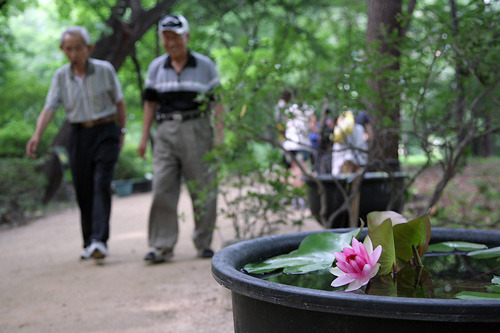
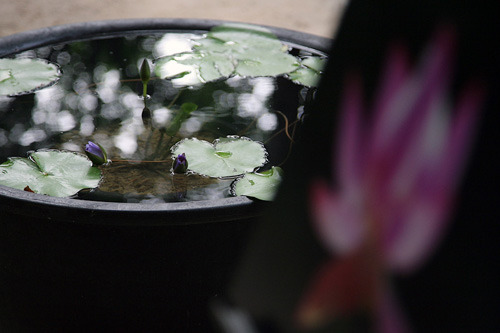
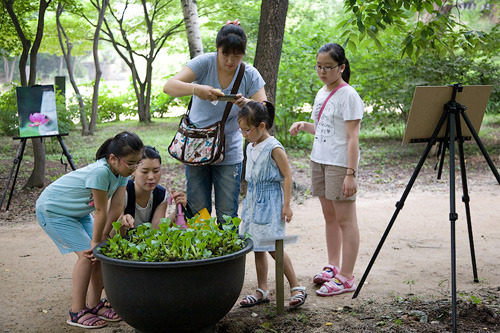
The clear stream euhgoo flows along Geumcheon path with pleasant, gurgling sounds, and you can take a rest in the shades drawn by the lush trees planted along the path. The path is also adorned with a variety of aquatic plants such as lotuses and water lilies as well as twenty-some photographs.


<Euhgoo flowing along Geumcheon path>


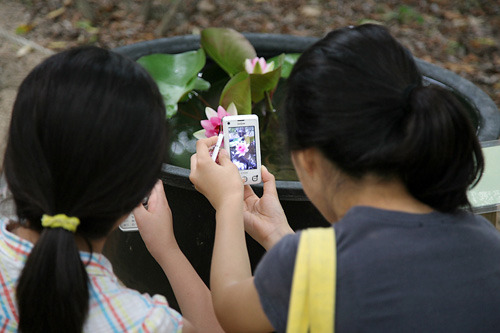
You can spot friends, lovers, families here and there, as well as foreigners visiting Korea. There are kids on a field-trip with the assignment to observe water lilies and hyacinths. There are members of a photography club on an outing. The various aquatic plants with their beautiful features and purifying qualities grab people’s attention for a long time.


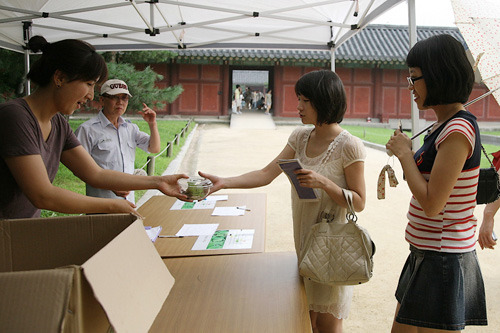
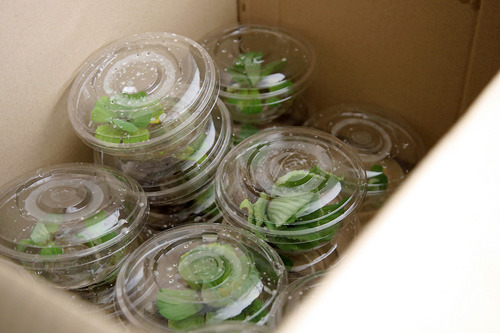
On the first day of the event, water lettuces known for their pollutant-fighting, purifying capacity were given out as a souvenir.


In the olden times, there were purported to be 8 ways of fighting the heat of the summer. According to Jeong Yak-Yong, a leading Korean philosopher in the late Joseon Dynasty, the 8 ways were :

1) Playing Baduk sitting on a cool bamboo mat
2) Practicing archery on a platform of pine trees
3) Playing the traditional Korean game of Tuho (throwing arrows into a jar)
4) Riding swings in the shade of a zelkova tree
5) Listening to the cry of cicadas in the forest
6) Writing poems on a rainy day
7) Washing feet in the moonlit night


How about trying a little vacation at Changgyeonggung palace, hmm?
Give it a try!

Saturday, March 6, 2010

Saturday Nite at Hongik

Just came back from Hongik area after attending one of my friends' (frm Yonsei) live band performance in a bar. Hongik area or 'Hongdae' area is famous for nite life and art exhibitions. It's one of the hot spot for young ppl and artists whether bad or good. You can see more young ppl with new hairstyle, weird hairstyle, or simply artistic style of fashion there compared to other places in Seoul. There is a university name Hongik University famous of its art and design courses. The exit of the Hongik Station was really crowded with ppl flooded into the Hongik area when i left. Seems like nite is too young for me to leave. Anyway, i was tired and cold so left early for sleep because i worried i will not be able to sleep if i keep hopping from one bar to another club.

The Hongik University area is the place that never sleeps, at least twice a month. While the area is full of youthful spirit and passion every day and night, it becomes the center for nightlife in Seoul, every second and fourth Friday of the month. Music and dance performances by talented independent bands and individual musicians are sure to make those nights memorable. The two nights are dubbed “Sound Day” and “Club Day,” respectively.--------(Source: Hi Seoul) http://english.seoul.go.kr/cav/ena/ntours_view.php?idx=7985

About my visit to the above mentioned bar, the performances of the bands were good in music but the singing of the lead singers of majority of the bands were so so only. While i take a break outside of the studio bar, surprisingly i found another band performing at the park opposite the bar. The audience are happy and proactive maybe because they know the performers. Guess they are all from Hongik University. The band is big with almost 8 ppl playing different instruments and one MC. Again the lead female singer is not good.

Sigh! How come no good band singer in Korea? I should ask my ex-roomate Mr. Firdaus a.k.a Eden to come and show his high key in Mariah Carey's song one day in Hongik area. And i can become his backup singer. Wahahaha!

I know you are laughing but i used to be a bass singer in university choir for 4 yrs neh........ ^^