Showing posts with label The only way to understand is to join and follow the culture. Show all posts

Friday, February 25, 2011

Korean Mushrooms Occupies the Tables of the Swiss

Article approved and picked from http://blog.naver.com/korea_brand/10103162079

Korean Mushrooms Occupies the Tables of the Swiss Know Korea / Know Korea

2011/02/15 09:37

복사http://blog.naver.com/korea_brand/10103162079

The superior species and high production quality of Korean mushroom is proved through its great texture and taste, already having been renown overseas. Today Korean mushrooms have attracted the Swiss people being one of their favorite dishes.

Korean mushrooms spotlighted as high-quality food

Jelomli, a grand department store of Zurich, the largest city in Swiss has Korean mushrooms on their sales list, sold at the lower ground grocery section, along with a variety of other raw mushrooms. Here Korean king oyster mushrooms are sold by 30-40 franc per kilogram, quite expensive which is equivalent to 35,000 ~ 47,000 won in Korean dollars.

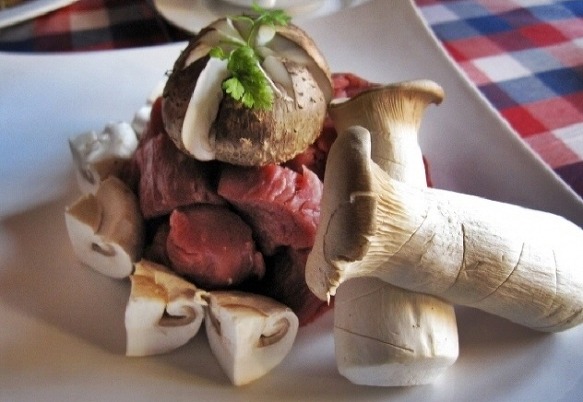
Swiss people, on sunny days, often enjoy barbeque parties with their family and friends sharing grilled meat and sausages, and the Korean king oyster mushrooms as the only vegetable to be added on the main grill list. Taken as a high-quality food item, the king oyster mushrooms are enjoyed for its bigger size and thick texture that is much suitable for a grill party compared to button mushrooms.

In Swiss, now it is not that difficult to meet these mushrooms from Korea in Swiss as they are not only supplied to department stores but also to Migros, the largest supermarket franchise in Swiss.
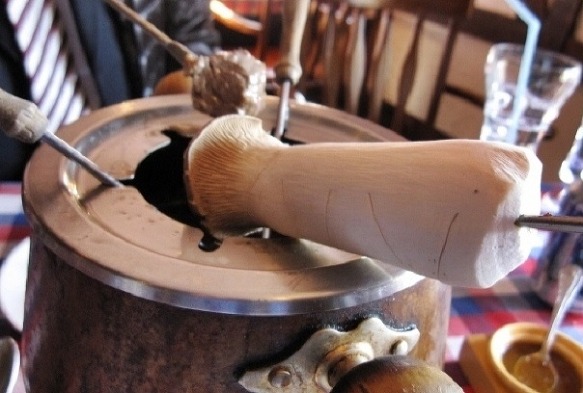
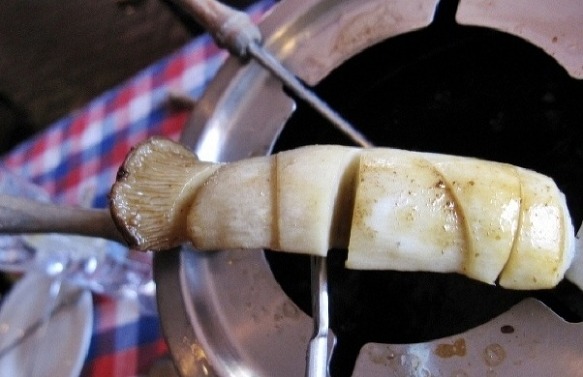
a Swiss restaurant in Itaewon, Korea> (Photo: Naver blog)

In Swiss, mushrooms are widely enjoyed by the people being one of the most popular food often used as an ingredient for sauces or even as main dishes. Regarding the sales of button mushrooms the amount of its consumption are 13,000 tons annually; 8,000 tons of raw mushrooms and 5,000 tons of cooked mushrooms. Here 7,000 tons of raw mushrooms are produced in Swiss and the import! rate of the total market consists of 15 percent. The Swiss people do seem to favor mushrooms a lot!

Cannot imagine a life without mushrooms!

The Swiss people in love with mushrooms

Even the economic crisis did not stop the Swiss fondness for mushrooms. In the second half of 2008 when the economic situation was not favorable, consumers did not cease to spend money on mushrooms. In 2009, rather the total consumption increased adding 300 tons compared to the former year. In fact, the fastidious Swiss customers looking for the best qualities seem to continuously increase the needs for fresh mushrooms.


Button mushroom is the most largely produced and consumed one in Swiss, which is a very traditional kind. However, Asian kinds started to receive attention along with the rising popularity of foreign mushroom species. These days foreign mushrooms that have been introduced during the 1980~1990s including shiitake, king oyster mushroom, grifola frondosa are now receiving some spotlight. Especially shiitake is enjoying popularity being ranked second in the consumer preference.
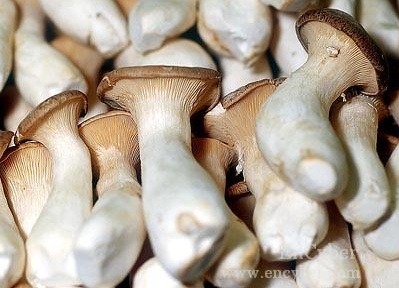
It may be no surprise that Korean mushrooms with high quality and taste has successfully created its market in Swiss. It had past 3~4 years since Korean king oyster mushrooms joined the dishes of the Swiss dining table.

Now the annual amount of mushroom import!s are over two hundred million Korean won. This was possible by both continuous efforts put to improving species and through quality control.

In 2009 renowned chefs from all over the world have visited Korea to participate in the ‘Amazing Korean Table,’ and Korean mushroom was used by all chefs. A variety of mushrooms were grilled or slightly boiled to be used as ingredients or become the main dish itself.

The taste and flavor of Korea mushrooms seems to prove its real worth no matter where it is. As the Swiss fondness for mushroom continues the future of the Korean mushroom overseas market is expected to be positive; we hope to create a broader international market, in addition to Swiss, for all consumers who want high quality mushrooms.

Friday, January 14, 2011

Would you like a bowl of Ttukbaegi?


Onggi, a traditional Korean pottery, has had a significant role as a food container in the Korean food culture. Not simply a plain pot it is recognized for its scientific principles; especially its breathing holes that remove toxic substance of foods and reduce the smell.

Sharing Intangible Heritage of Korea with the World


T
he Cultural Heritage Administration of Korea (CHA) produces DVDs on intangible cultural heritage of Korea inscribed on the UNESCO Intangible Cultural Heritage List. DVDs will be distributed to relevant organizations and researchers in Korea and overseas; public online access will be provided as well. It is expected to help understanding on intangible cultural heritage of Korea further contributing to create a higher brand value of Korea.


Contents of the Month


T
he Cultural Heritage Administration of Korea (CHA) produces DVDs on intangible cultural heritage of Korea inscribed on the UNESCO Intangible Cultural Heritage List. DVDs will be distributed to relevant organizations and researchers in Korea and overseas; public online access will be provided as well. It is expected to help understanding on intangible cultural heritage of Korea further contributing to create a higher brand value of Korea.


Saturday, October 16, 2010

The Fascinating World of Hangul Calligraphy


Article picked from http://blog.naver.com/korea_brand/10095749968

Are you familiar with calligraphy?

There is a growing interest for hangul (the Korean alphabet) not only as a set of alphabets but also as an artistic theme. Known for its highly scientific and pragmatic nature, now hangul is being re-discovered as calligraphy (the art of fancy lettering) as well as applied as a fashion component.

In calligraphy, letters transform into something unique, one-of-a kind, and creative that reflects the emotions of the particular theme that the words denote. Used in the poster for “Festival” (a film directed by Gwon-Taek Lim), hangul calligraphy is now used everywhere, far and wide, from movie posters, book jackets, record covers, to product advertisements etc.

Calligraphy on the Web

Calligraphy is gaining popularity in the online world as well. Breaking away from the uniform Microsoft fonts, web users are now turning to more original letterings and do not hesitate to make a purchase for calligraphies to use for their blogs and homepages. It is estimated that annual volume of font purchase is over KRW 10 billion.

Cyworld, the widespread web site that offers mini homepages, sell 20,000 fonts daily, and introduces new fonts everyday that are customized to meet users particular wants and demands. Fonts that apply the handwritings of celebrities such as Yuna Kim are particularly appealing to the customers.


People Love Hangul-themed Fashion

Lie Sang-Bong is one of the most well-known Korean fashion designers who is especially acclaimed and recognized for his hangul-themed works. His range of work includes not only clothes, but accessories, electronics, and home appliances as well. Lie incorporates hangul usually written vertically, aptly conveying traditional Korean flavor at the same time as keeping it modern and suave.

Hangul-themed design is gaining further vitality with the efforts of Dong-Eui University in Busan, which established “Han Fashion Center” in 2006 with the support from the Ministry of Knowledge Economy.

The Han Fashion Center launched its own brand called “Hooga” and undertakes various activities such as exporting design carpets abroad and supporting some 130 local companies that lack design capacities. The center aims to create design products that capture the characteristic beauty of hangul – the harmony between its lineal and curved lines.

Hangul, created by King Sejong, is now being re-created in the hands of designers.

As you may have noticed, last October 9 was Hangul Day in Korea. It was a day for us to ponder the value and beauty of the great Korean alphabet, especially in these times where there is an unbridled deluge of foreign languages, ugly slangs and obscure jargons in our everyday communication.

Benefits of Red Ginseng


Article picked from http://blog.daum.net/korea_brand/781

Autumn is here now in full swing. As the saying goes, you can see “the sky getting higher and horses getting plump.”

In these crisp, pleasant days, are you one of those people who feel always sleepy and somewhat lethargic, dozing in the bus and missing your stop?

If you are, then I’d like to introduce you to a certain health food: Red ginseng.


Red Ginseng Prevents Swine Flu

When the H1N1 swine flu virus swept the nation last year, the sales of ginseng and red ginseng skyrocketed as well. People believed there is nothing more effective than Korean ginseng in increasing immunity against flus. Not totally ungrounded, but still there hadn’t been sufficient scientific study to back up such an argument.


Now, more about ginseng has been unveiled at the 10th International Symposium on Ginseng held on September 15. The results of a research on the effectiveness of ginseng in preventing H1N1 were announced. According to the study, the group who took ginseng along with vaccination had a 40% higher survival rate than the group who took only vaccination. Red ginseng, in particular, was found to boost up defense against not only H1N1 but seasonal flus as well.

An experiment was conducted with 227 participants at three medical offices in Milan, Italy. Half of them were given ginseng at a dosage of 100mg daily, the other half placebo. The results showed a significant decline in the frequency of colds and flus in the treated group compared to the placebo group (15 versus 42 cases).


Red Ginseng Also Reduces Fatigue and Prevents Cancer

Other benefits of red ginseng include reducing fatigue, improving blood circulation, and getting rid of fat and cholesterol.


Red ginseng also helps quench thirst, especially for diabetics who urinate a lot to get rid of the extra sugar in their blood. Also, red ginseng is good for enhancing your stamina in general. Those who often catch cold and never have enough energy might as well give it a try!

The size of the domestic red ginseng market, currently, is about KRW 1 trillion. And with the increasing consumer demand, it is expected to further grow, as much as six-folds within a few years. In addition, as an increasing number of foreigners are taking interest in the benefits of red ginseng, there is to be a lot more export and branching out into global markets.

Well, it seems like red ginseng is all that is good! Why not brace up ourselves against the vicious seasonal flus with some help from red ginseng? :)

Saturday, July 31, 2010

Spend the Summer at the Royal Palace

Article picked from http://blog.naver.com/korea_brand/10091062960

Spend the Summer at the Royal Palace Know Korea / Know Korea

2010/07/28 12:57

복사http://blog.naver.com/korea_brand/10091062960


An event titled “Spending the Summer at the Royal Palace” is being held from July 24 through August 31 at Changgyeonggung Palace. Let me introduce it to you.

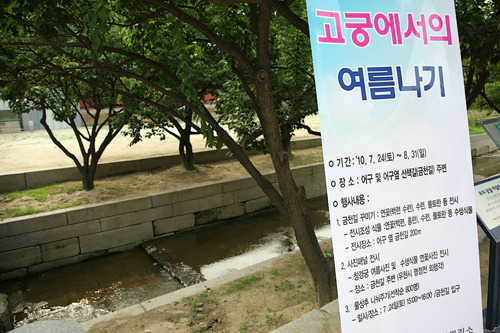
Upon entering the palace you will be able to see a banner in front of euhgoo (a stream flowing from a royal place) that traverses the palace.


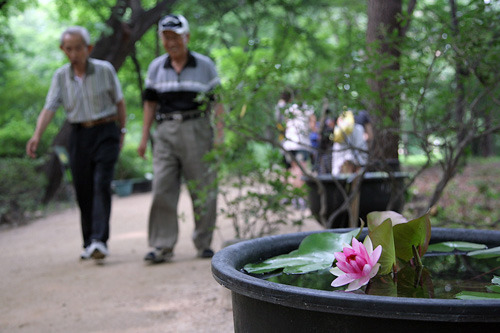
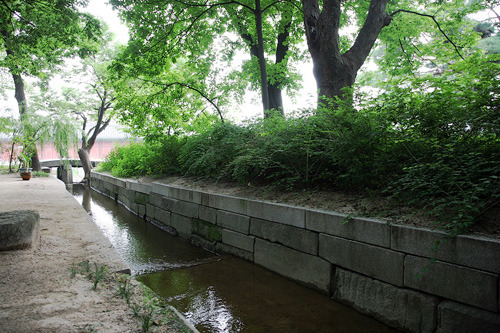
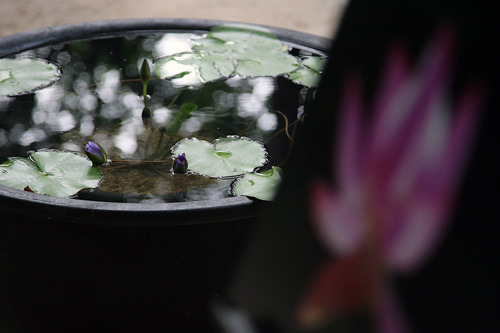
The clear stream euhgoo flows along Geumcheon path with pleasant, gurgling sounds, and you can take a rest in the shades drawn by the lush trees planted along the path. The path is also adorned with a variety of aquatic plants such as lotuses and water lilies as well as twenty-some photographs.


<Euhgoo flowing along Geumcheon path>


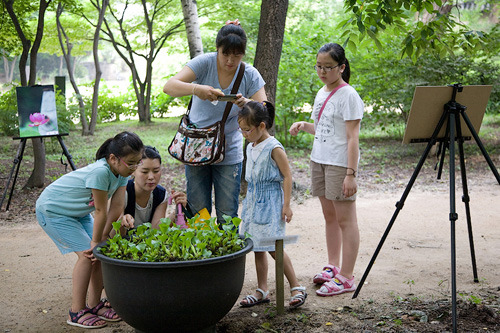
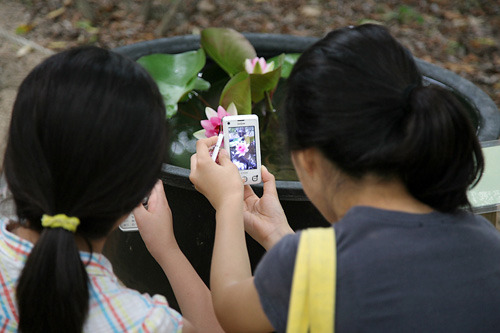
You can spot friends, lovers, families here and there, as well as foreigners visiting Korea. There are kids on a field-trip with the assignment to observe water lilies and hyacinths. There are members of a photography club on an outing. The various aquatic plants with their beautiful features and purifying qualities grab people’s attention for a long time.


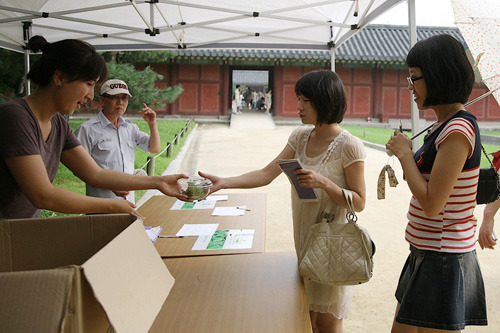
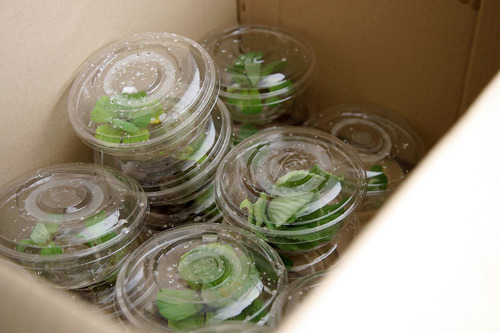
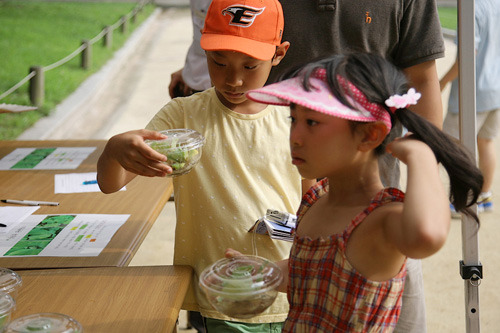
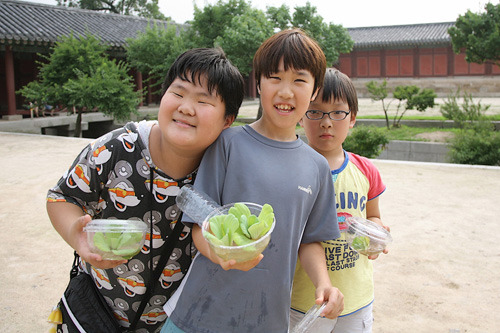
On the first day of the event, water lettuces known for their pollutant-fighting, purifying capacity were given out as a souvenir.


In the olden times, there were purported to be 8 ways of fighting the heat of the summer. According to Jeong Yak-Yong, a leading Korean philosopher in the late Joseon Dynasty, the 8 ways were :

1) Playing Baduk sitting on a cool bamboo mat
2) Practicing archery on a platform of pine trees
3) Playing the traditional Korean game of Tuho (throwing arrows into a jar)
4) Riding swings in the shade of a zelkova tree
5) Listening to the cry of cicadas in the forest
6) Writing poems on a rainy day
7) Washing feet in the moonlit night


How about trying a little vacation at Changgyeonggung palace, hmm?
Give it a try!

Thursday, July 15, 2010

All about Makgeolli (Korean Rice Wine)

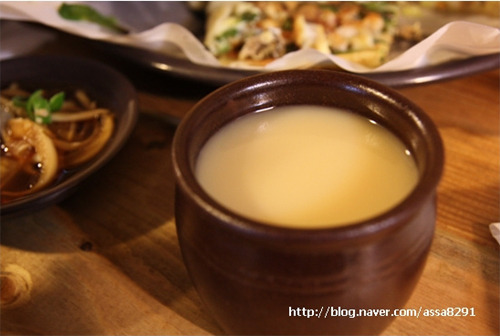
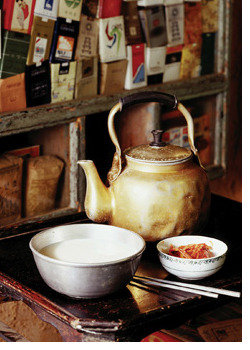
The milky, off-white color….the deep, slightly bitter, mouth-watering taste…and the sweet finishing flavor….

Guess what it is?
Yes, indeed, we are talking about “makgeolli” here, one of Korea’s representative traditional alcoholic beverages.

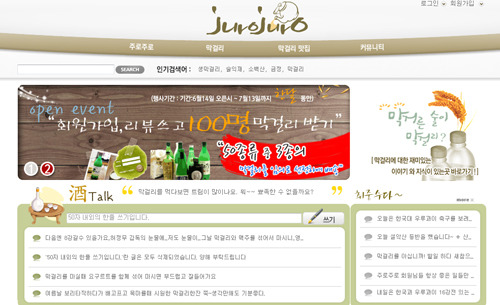
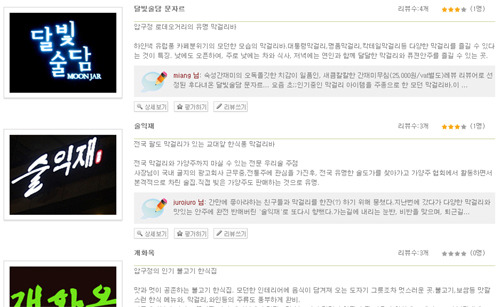
In line with the recent makgeolli boom, the first web site devoted solely to makgeolli (http://www.jurojuro.com) has been launched by the Ministry of Food, Agriculture, Forestry and Fisheries and the Korea Rice Foodstuffs Association.

“Juro” here refers to the journey of finding makgeolli and other tasty food along the road. It can also mean the longish table for placing liquor glasses, and by extension, the talk, laughter, and mingling among people taking place over a bowl of makgeolli.

http://www.jurojuro.com>


According to the Ministry of Food, this year’s makgeolli market is estimated to be around USD 550 million worth of scale. And 60% of the market nation-wide is dominated by a handful of major makgeolli manufactures, while for the capital region, as much as 70% is taken up by them.

The fact is that smaller, lesser-known, local makgeolli companies are losing ground in the competition with the giant companies. In case of Gyeonggi-do area, for instance, all 40 companies but for mere two or three are facing a drop in sales ever since the makgeolli boom.

So the Ministry of Food decided to open the above-mentioned web site to introduce and promote small and medium-sized makgeolli manufacturers that each have their own distinct color and flavor.

The web site’s two main themes are makgeolli and makgeolli side-dishes. There is a “Navigation” section where you can search for various types of makgeolli either according to its region or characteristics, as well as view customer reviews and experts analyses. There is also the “Liquor Talk” section where the visitors of the web site engage in free chats.

But I’d say the highlight of the site is the “makgeolli side-dishes” page, which introduces places that have the best dishes to go with makgeolli. Just by looking at the pictures of all kinds of “anjoo (dishes served with liquor),” your mouth will start watering!


There are around 700 makgeolli manufacturers throughout Korea, and as in the case of wine, each region boasts its own distinct flavor. On the web site, you can search for specific kinds of makgeolli that you want – whether it’s live makgeolli or sterilized makgeolli, or whether it’s made with Korean rice, exported rice, or flour etc. So you can pick and choose a makgeolli that just suits your taste.


Drinking makgeolli the right way?

Makgeolli tastes best when you stir it. Some people wait a while after pouring the liquor and just sip at the clear upper layer, saying it tastes crisp and clean that way, but then you’re missing out on the very gist of makgeolli. All the healthy parts – the yeast, lactic-acid bacteria, vitamin, fiber etc – are found in the sediment part that sinks to the bottom of your makgeolli bowl. So don’t forget to stir it!


The whiter makgeolli, the better?

Nope, that’s not true. The difference in color comes from different varieties of yeast. The Japanese-style rice yeast is closer to white in color, while wheat yeast, which is made in a typical Korean style, is somewhat yellowish in color. Rice yeast gives out a clear, simple taste and wheat yeast a richer and heavier taste. The choice is up to you.

Another tip: Sterilized makgeolli was made to enjoy the scent so it is best to keep it at around 5–10 degrees Celsius. In contrast, draught (live) makgeolli is made to savor the refreshing feeling of a carbonated drink, and so needs to be kept around 0–5 degrees Celsius.
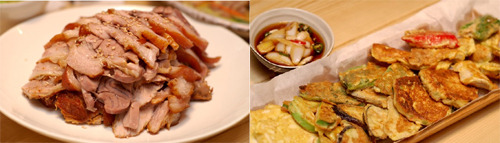
Side dishes that go especially well with makgeolli? Among hundreds, I’d go for “jeon (Korean pancakes)” and “jokbal (pig’s feet)”!


The recent makgeolli boom is also in keeping with the Korean government’s efforts to globalize hansik (Korean cuisine) as well as to increase rice consumption.

And I hope the newly launched web site “www.jurojuro.com” plays its part as a tool to spread makgeolli culture to people both at home and abroad!


Sunday, June 13, 2010

Korea's First Match in World Cup 2010


Date: 12 Jun 2010 (Sat)

Time: 2030 (Korean time); 2130 (Msian Time)

Venue: 1) Photos taken at Seoul
2) Host country: Msia's forefather, the former Land of Apartheid

Went to Seoul City Hall yesterday to watch the first 2010 world cup match for S. Korea. They played against Greece. The bet ratio is 50:50 (courtesy of my former form-6 class monitor, keke).

Although it is exam season now, i cant help but to get my ass out for some fresh air to kill off the drowsy mood of the rainy Saturday. Plus this match will be the best time for me to get a glimpse of how Koreans cheer for their country. It's a whole new experience for a kampung boy like me who only get to cheers for his beloved country at Thomas Cup and Olympic badminton in world arena at most.

This first match of S.Korea was placed at the best time on Saturday nite. The rest of the 2nd and 3rd game were scheduled to be in the midnite. So, not much for me to get out from the scenes and cheers during my sleeping time i guess. Did not dare to ask other friends to join me during this exam season except one who i tot was a football maniac. At the end, the maniac turned out to be wise enuff not to join me for the fear of not have enuff study and flunk 5 of the exams next week.

Travelling and doing things alone are always enjoyable as I get to go wherever i like, change my plan easily, get to meet new ppl and observe my surrounding more sharply (dont forget that i still have the instinct of being an agent; well trained since my previous job in CIA~~).

I was lucky enuff to see the crowd's responds during the first goal around 7 minutes before i left the City Hall field. Again, was lucky enuff to see S.Korea's 2nd goal in the school hall. The view of the match was better compared to the City Hall which were too crowded and messy. S.Korea won Greece with 2-0. Everyone was so happy as well as the pub owners. Yeah, the pub in Sinchon will have good business even in the exam season, thanks to the match.

I was happy for S, Korea too, but it would be better if Msia is competing in S.Africa too. Can you believe Msia was on par with S.Korea and even once defeated this Asian Football Giant to proceed to the 1972 Olympic in Munich, Germany? Too bad, S.Korea survived and last but Msia has been dropping in the world sport arena as well as its economy. FIFA released the latest Coca Cola World Rankings: S. Korea at 47th and Msia at 146th. My primary school mathematics apply here, 99 place behind. What a joke! All thanks to corruption and match-fixing scandals.

Alas, welcome to Msia, where corruption is well accepted and the Anti-Corruption Commission (MACC) has not been working for the ppl but they work side by side with the current corrupted-government covering their shit. My good friend during uni time was found dead under the MACC building last year, one day before his wedding. He worked for the opposition party and was summoned for an investigation by the MACC for a case accusing the party for misusing a very small amount of state fund, which amounted to RM2000 (OMG! less than 600 USD, not even a single tip of % of the amount received by some big fish in the ruling parties and their cronies). I certainly do not believe my friend will jump from the MACC building, suicided himself ; these must have something to do with the MACC who held the investigation on him till midnite. No CCTV was recorded. Funny!

Wow! Surprisingly, Msia's standing is not that bad in the world corruption perception index, ranking at 56th behind S. Korea (39th) and of course Singapore (3rd) in 2009. Am i wrong about my country being too corrupt? But what i know is my friends corrupted the traffic police. Once i was instructed to hand the monthly 'fee' to the KL city hall staff who came to my previous work site by his bike. If not paid, they have all sorts of power and excuses to summon you ranging from cleanliness and public hazards which are very subjective.

My Japanese friend was was requested bribery money from a custom officer when he came into Msia from Singapore. Eventually, he bribe the officer but jotted down the name of that officer. He reported the bribery case to the head quarter of MACC and so coincidently it was the same day that my politician friend mentioned above was found died under the MACC building! My uncle's truck have to pay 'protection fee' to the traffic police for not giving problem to them on some quibble matters. Believe me, you pay differently for different districts and federal route. The more rules the government setup, if not being study properly, will serve as a fertile ground for corruption during the execution.

I'm not sure if i will be charged under the sedition act or any other internal security act for this posting but if it is surfaced, my posting will have fulfill its mission ~~~


Ok, time to watch football!


Monday, May 31, 2010

What Korean Children read during their free time?


Went to my colleague's house last Wednesday nite after he finished his class at 1030pm. Reach a medium and tidy apartment after 1 hr by bus. I decided to stay overnite at his place so that we can depart from his apartment at 6am the next morning. We were supposed to a visit a natural gas pipes installation site near Yongin, some 30 km from his place. If not, i need to drag my ass up at 4 or 5 am in the morning, take a bus to reach his place the next day.

My colleague has a girl and a boy. The girl is at primary standard 5. Saw her english homework that she left for her daddy's inspection. Good english i would say, at least better than me when i was at her age. Oh, she attended english tuition near her home.

Manage to get a look on some books that surrounded me in the room. I was placed in their reading room. Surprisingly, not only the children read comic version of encyclopedias, they also read a good collection of 'chicken-soup-of-soul' kinda literatures that are charming, calm, and beautiful.

It reminds me of my collection of comic style encyclopedias that eventually given to my cousin when i was in university. Hmm.... i will make sure i buy a new set in the future. For the little one (hint hint ^^) and myself.

As we went out early in the morning, i did not manage to meet my colleague's children. However, i did met his wife in the morning and had a nice breakfast. Guess what? That was probably the earliest breakfast taken in the form of rice in my whole life. Wakakaka!