Showing posts with label What makes Korea. Show all posts

Tuesday, October 4, 2011

Fall Foliage Trip to the South

Article picked from
http://blog.naver.com/korea_brand/10120391749

Starting from the North to the South, whole place is changing its color as it gets closer to the end of autumn. Autumn leaves turn red when the weather gets cold, so mountainous Gangwon-do become the first place of autumn leaves. When you look down from the sky, leaves descend to the South and finally stop at Jeju island.

Shall we move on to the South?

Foliage Trip to Mt.Palgong

Mt.Palgong, which is located in Daegu, is always popular among many people. You don’t need to spend much time and money to enjoy the autumn leaves. The mountain is said to be the most beautiful in late October.

Trip to autumn leaves starts at the entry to the Mt.Palgong. 1,300 gingko trees are lined up along six kilometer long road between Gongsan tunnel and School, which is very popular car driving course. Going down the road after tunnel, you will be amazed at gingko trees. It is fantastic to see golden wave of gingko trees.

When you turn to Dongwha temple at Baekan intersection, you’ll meet the line of gingko trees. After passing by school, you’ll meet maple trees. It is simply beautiful.

Plus, Mt.Palgong belt way is very popular among drivers for the beauty of its maple trees. The whole mountain is full of red color when the fall reaches its peak. You’ll definitely be amazed.
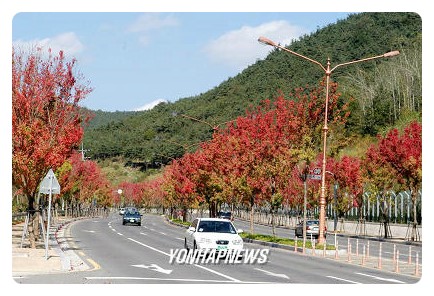

(Source:Yonhap News)

Hiking is the best way to enjoy the autumn of Mt.Palgong. There are many hike ways in the mountain such as Buin temple road, Gatbawi road and Dongwha temple road. Some buddhists pray toward Buddha statue at Gatbawi. This buddha statue was made in Shilla dynasty and became known as praying site for education, health, occupation, and baby boys. Many people come to this site to pray for their own wish every day.

Trekking to the Autumn of Mt.Jiri

Mt.Jiri is the second highest after Mt.Halla of Jeju island. This mountain is huge. There are so many famous and beautiful sites in the mountain. Autumn leaves of this mountain are as beautiful as other mountains.

Autumn leaves start to turn red in late September at Mt.Jiri. It is not well-known but you can enjoy autumn leaves earlier than any others in southern part.

Foliage of Mt.Jiri will start in 5th of October at Cheonwang peak, about 15th at main line, between 20th and 25th at Pia valley and three or four days later than Pia valley at Baemsa valley. If you want to get the most beautiful scenery, you should go up to Cheonwang peak. The most beautiful hike way is between Sesok and Chunwang Peak.

Cho-Sik, a scholar of Joseon dynasty, said “Don’t tell anybody that you’ve seen foliage without seeing the foliage of Pia valley. Foliage of Jikjeon is one of ten beautiful sceneries in Mt.Jiri. Pia Valley is famous for hike way of foliage. Foliage hiking in Pia valley starts at Seongsamjae and continues to Nogodan and descends to Pia valley or moves forward to Baemsa valley. This hike way has so beautiful scenery that many people take this way.

Foliage in Baemsa valley is as beautiful as Pia valley. Pia valley is famous for foliage whereas Baemsa valley is famous for valley itself. Baemsa valley is nine kilometer long and colorful leaves harmonize with that valley. Foliage spreading from Banseon complex to Ganjangso is regarded as the most beautiful scenery in Baemsa valley.
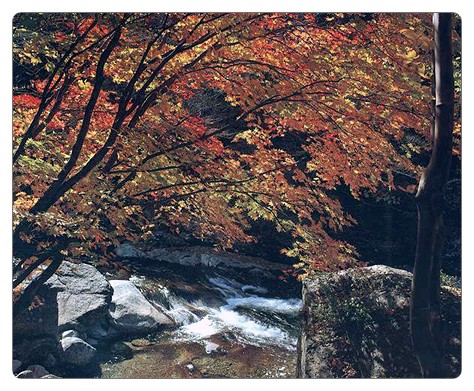


(Source: Korea Tourism Organization)

There are some other foliage sites to see in Mt.Jiri. Various hike ways have been developed since long time ago. Shall we take a trip to Mt.Jiri?

Mt.Dyuryun, the Harmony of a thousand years history and the beauty of the Mountain

Duryun mountain, which is located at the southernmost peninsula, is full of evergreen broadleaf and deciduous broadleaf. There are some national treasures such as Daedun temple, Pyochung temple, the bell of Tapsan temple and so on.

Duryun mountain is well known for camelia and foliage. The valley is two kilometers long from the group facilities complex to the temple. The latest foliage, regarded as one of the most beautiful autumn scenery, can be seen there.
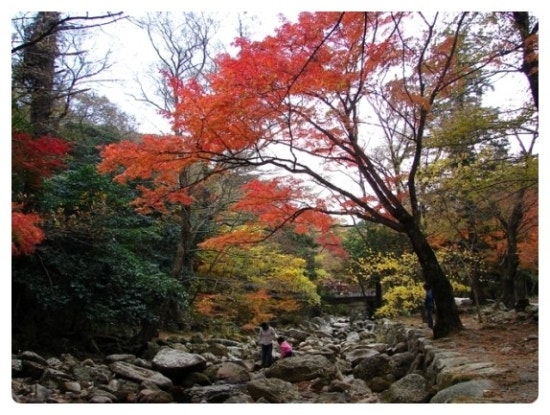


(Source:Daeheung Temple Wesite)

The best scenery of this mountain is a maple tree forest of the way to Daehung temple. Take a walk through the temple gate. You’ll refresh yourself. Maple forests and camellia can be seen. Trees are like tunnel. When you cross a bridge, there is tunnel of maple trees.

Let’s walk through the yellow and red gingko trees and maple forest and keep going up along the car road. Mountain is covered up with yellow and red wave. Crossing valley and bridge, you’ll meet Youseondang and backdrop of foliage which are the highlight of the journey. The last of the journey is the road up to Daehung temple.

Maple Leaves of Mt.Halla, the Southernmost of Korea

Foliage of Mt.Halla in Jeju island is not as well known as other sites. The famous sites are Wanggwanneung, Mansae hill, road between Youngsil rest area and Byeongpung rock area, road 1100 and 516. In particular, uniquely shaped 500 rock pillars stand at Youngsil rest area and Byeongpung rock area. The area is probably the most beautiful site.

Youngsil of Mt.Hallan is easy to access for all walks of life. Youngsil course starts at pavilion. Road to Youngsil is flat, however, the pine trees and maple forests along the road will lead you to the unique landscape. Walking a little further up, you can have good scenery of foliage. Maple forest starting under the Byeongpung rocks continues to gate of the hike way. It is magnificent.

Another joy of Jeju trip. If you have a plan to go to Mt.Halla, do not miss autumn foliage in Youngsil.
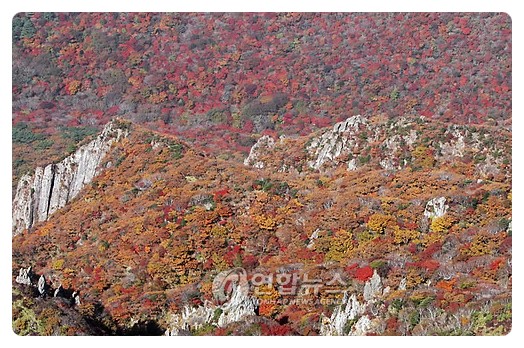

(Source: Yonhap News)

How was the journey? Autumn is right at the corner. Shall we take a walk and breathe in the forest of autumn foliage?

Learning Strong Wisdom of Sea Women in Jeju Island

Article picked from http://blog.daum.net/korea_brand/1424

Learning Strong Wisdom of Sea Women in Jeju Island

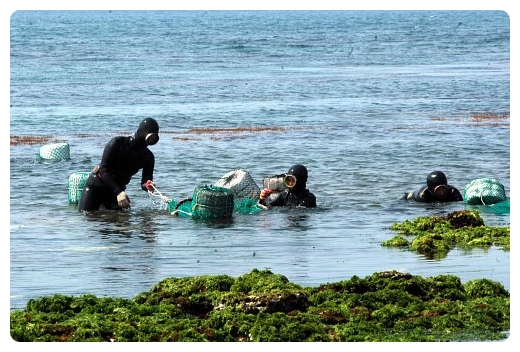
Ocean of Jeju island has Mt.Halla and hundreds of parasitic volcanoes. In addition, the ocean has sea women who represent strength. Sea women are the past and future of Jeju island. Ocean is their life and they have struggled over hundreds of years. Let’s learn who they are.

Catch A Glimpse of History and Footstep of Sea Women

Sea women may be only in Korea and Japan. Most of Korean sea women live in Jeju island, estimated about 20,000. We assume that the origin of sea women started at prehistoric era when human sought their food in the sea, considering that the shrine for fishermen and sea women existed from ancient times. But most of all, Jeju island is believed to be a birthplace of sea women.

(Source: Local Segye Shinmun)

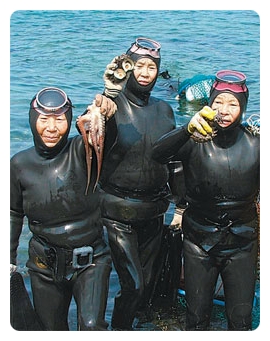
Jeju women have been destined to swim in the sea unless they did not farm in the field. Girls started to swim at the age of seven and eight. When they were seventeen and eighteen they became sea women. Their prime time last until 40.

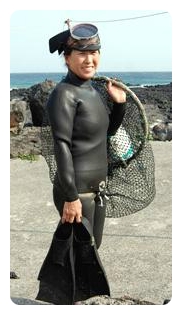
They usually work five meters under the sea for 30 seconds but if necessary, they dive 20 meters and endure for two minutes under the sea. Whenever they come up to the surface, they breathe out deeply. In addition, they join community gathering and organizing sea women’s club or diver’s club. By these activities they decide diving time, diving manner and joint collection and carry out on their own. They contribute to prosperity of villages by joint raise and joint collection of sea food.

They dive 20 meters under the sea and endure two minutes long and swim in the cold winter. They have extraordinary skill and spirit. They dive even after giving a birth. There is a folk song, ‘Song of Sea women’, showing determination of sea women of Jeju island.

Meet Sea Women in a Variety of Way

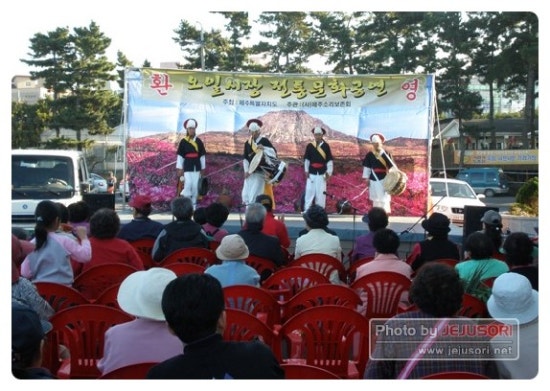
It’s not easy to see them even though we often heard that they have strong spirit and wisdom. Fortunately, the Jeju city government hosts a festival and opens a museum to promote sea women. The festival started first at 2002 world cup season. There are a variety of programs showing a myth of Jeju, life of sea women and life of fishing village. During the festival, many events are presented such as photo gallery painting contest, food court, and fireworks in order to promote sea women.

(Source: Korea Tourism Organization)

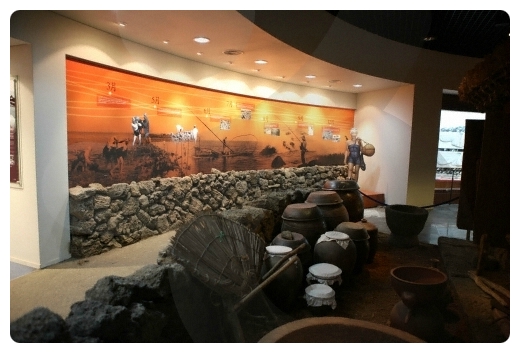
Sea women museum displays the history and work of sea women and the tools of collecting sea food. Four story museums have three exhibit rooms, video room, observatory, and children hall. The first exhibit room reproduces sea women’s house, fishing village, shamanism and seasonal customs. The second exhibit room is made of workplace of sea women. The third exhibit room has fishery of ancient times, sea of hope for better understanding of fishing village and culture. Museum is the place for children education.

Movement to Preserve Sea Woman

Sea women would disappear if the seniors stop diving. Jeju University and other Korean research centers claim that sea women should be designated as the living culture heritage. Central government and local government need to work hard on the matter.

(Source:Donga Ilbo)


Jeju sea women are very rare so city government is trying to list them as the world cultural heritage. Because they are the only one who collects the sea food without any tools. Sea women can be world class culture asset if we preserve them well.

(Source: Seoul Shinmun>

Sea women became the representative brand of Jeju island. Their frontier spirit and diligence became known outside the world. Their image swimming in the sea is a present to modern people. They awaken frontier spirit and wisdom. They could disappear as they get older in the future. We hope that their spirits continue to be preserved. Through the centuries of history, sea women have struggled to survive in the ocean. It is necessary to preserve their spirit and promote sea women as world brand.

Friday, September 16, 2011

Journey of Literature

Journey of Literature Know Korea / Know Korea

2011/09/15 17:30

복사http://blog.naver.com/korea_brand/10118744271

Journey of Literature

For centuries, novels entered our life and truly touched our heart. No matter when and where it was written, the great novel transcends the time and space, attracting thousands of readers all over the countries.

The reason we feel close to those novels is that the author used the real backgrounds and era, many of which were from their experiences. So, that’s why you feel it real when you visit the place of the novel. Let’s go into the background of great novels.

Hometown of ‘When Buck Wheat Flower is in Blossom’

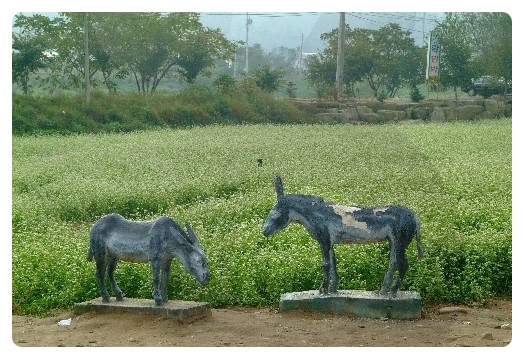
Bongpyeong, which is in Pyeongchang, Gangwon-do, is the background of ‘When Buck Wheat Flower is in Blossom’ and also the hometown of the author, Lee Hyo-seok. Designated as the first cultural village in 1990, this village is full of buck wheat flowers. Tourists stop by to see the mill and the bridge that appeared on the story.

There are many places reminding ‘When Buck Wheat is in Blossom’ in Bongpyeong. Firstly, let’s go to Lee Hyo-seok Culture Center. You will see everything from his life to work.

It displays his medals, remains, first published book, translated copies in English and Japanese, magazines and newspapers introducing his works. In addition, you can take a walk in a garden of literature, buck wheat flower road, and a small path.

You will find Lee’s birth place nearby. In his early years, it was a thatched-roof house, but later it was changed into a house with galvanized iron roofing during nation developing project,Saemaeul Movement and then into tile roofing. Fortunately, Pyeongchang-gun restored his house to the original one in 2007. The farming tools on the walls will make you feel being in the past.

<Bongpyeong, hometown of a renowned novel, ‘When Buck Wheat Flower is in Blossom’> (Source: Korea Tourism Organization)

Not far away from here, there is Gasan Park for commemorating him. Chungju pub was built nearby and his statue and the monument were placed in a sculpture square. Getting out of the park and crossing the Seob Bridge, Bongpyeong traditional market will be waiting for you. Every scene in the novel will be alive in front of you.

Pyeongchang has held Hyoseok Writing Contest since 1971 with respect to Lee Hyo-seokand his achievement. Soon after, in 1999, it was expanded to Hyo-seok Culture Festival so that everyone can participate. Every mid-September, tourists come to the festival. The themes of the festival are affection from novel, fragrance of nature, nostalgia of tradition.

Why don’t you go to Bongpyeong and see heartbreaking sceneries of all mountains and buck wheat?

Journey to ‘Eight Sceneries of Gwandong Region’

If you are Korean, you might remember this one. ‘Gwandongbyulgok’, a travel story. The lyrics used to appear in a textbook and a school exam. It is about a newly appointed governor,Jeongcheol’s impression on the beauty of Gangwon-do. He praises the breathtaking scenery of Mt. Geumgang and then tells what Chongseok pavilion and Samil beach are like from the east coast. The story continues as he headed to Euisang pavilion in Yangyang.


Euisang Pavilion> (Source: Korea Tourism Organization)

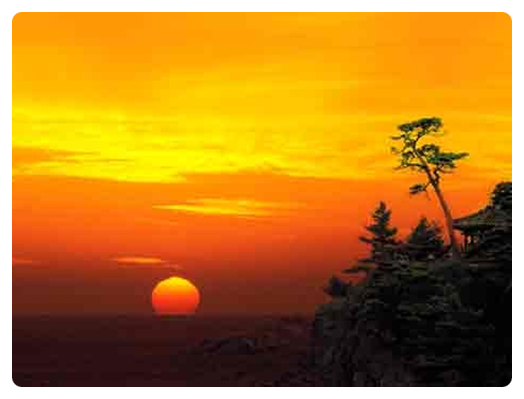
Naksan temple was founded by Buddhist priest, Euisang, in a reign of King Munmu. It is regarded as one of the three major Gwaneum temples. There is a legend that Euisang met Buddha Gwaneum at Naksan. Euisang pavilion is located on the cliff near the ocean. There are old pine tree named ‘Gwaneum’ around and a statue of Buddha Gwaneum on the hill.

East Sea seen from Euisang pavilion has many beautiful rocks and blue ocean. A lot of people come to see the sunrise like Jeongcheol described.

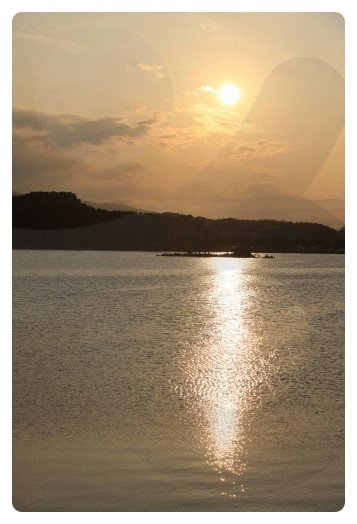
Finally, Jeongcheol arrived at Lake Gyeongpo where the fresh water and the ocean meet together. The lake was formed as the sand accumulated and eventually blocked the water route.

For that reason, the area got to have a beautiful soft sand beach, eastern coast and wide lake. Everyone easily forget how time flies when they face the wind breeze and appreciate the view from pavilion. Indeed, they are the truly magnificent sceneries.

Gyeongpo> (Source: Korea Tourism Organization)

Now, let’s go to the south. Nearby a beautiful river of Samcheok, there is Jukseoroo. Unlike the other Gwandong pavilions located around coast, this pavilion is on the cliff, which is special. Next, Jeongcheol arrived at Mangyang pavilion, which he chose as the last destination of his journey. At the end of the journey, Jeongcheol stood there and encouraged himself for coming future. The pavilion located on the most southern part of Korea received the sign board that says ‘Gwandongjaeillu’ from King Sukjong, which means the best pavilion in Gwandongarea. If you look at the ocean from there, you will understand why.

From September to October would be the perfect season to enjoy the full view of East Sea. If you love the ocean and car driving, this journey is the one you would love.

The Journey to Beolgyo, Site of Novel ‘Taebaksanmaek’

The novel ‘Taebaeksanmaek’ is considered one of the best sagas which deal with modern history of Korea. The story is about before-and-after war and the people. Since it is said that the novel would be dramatized, Bosung-gun Bulgyo, Jeollanam-do, the background of it, started to rise as a tourist attraction.

Bulgyo is the most crucial background of the novel. Still, it is an important place where the ocean and river meets together, and a traffic hub connecting Goheung, Bosung andSuncheon, which brings in many people.

All the mountains and fields are the background of ‘Taebaeksanmaek’, such as Baekdong village, Chudong Resovoir, Woeseo and Nakan. The railway, mountain valley, Rich family,Hyun’s mansion, Hong Bridge, small church and embankment which appeared in novel are still well preserved.

Jo Jeong-rae Taebaeksanmaek> (Source: Korea Tourism Organization)

If you see the area surrounded by mountains, you will recognize the place is just perfect to present the era of disturbance.

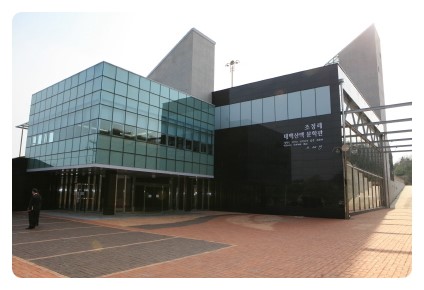
The literature center is near Sohwa’s house of the novel. It displays author’s notebook, camera and six-years of written note of writer Jo Jeong-rae which is taller than a grown-up man. The center also became famous since the novel got popular.

There are many places which were mentioned in the novel. Why don’t we go to Beolgyo to feel the great literature and the era of Korea?

Just for reading this, I think you already started the journey. Only the ones who get to the site of the novels can tell how exciting it is. Also it must be fun to think of how different it would be from what you have imagined of real sites.

Your journey with Korean literature will be more fun after going through the books again. Why don’t you start a trip to find out the sites of your novels?


A Five-Day Market in Jeju

A Five-Day Market in Jeju Know Korea / Know Korea

2011/09/15 17:38

복사http://blog.naver.com/korea_brand/10118744881

A Five-Day Market in Jeju

We can figure out culture and customs in traditional markets. I’d like to introduce you a five-day market in Jeju island which presents its own culture and customs.

A five-day market opens five days in a row per month, however, just 40 and 50 years ago, it was nothing but a normal market crowded with people. As time goes by, the market has modernized, but unfortunately nine markets remained so far.

A Five-Day Market in Jeju, History and Tradition

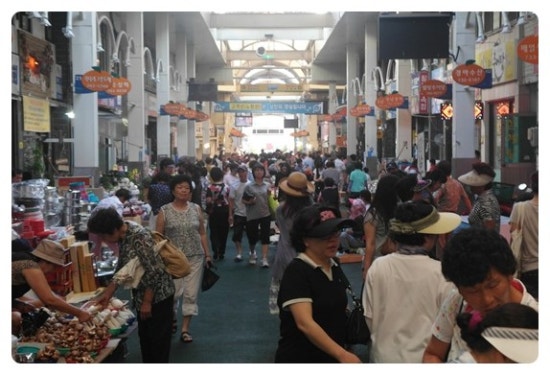
<Maeil Olleh market in Seogypo> (Source: Jeju Sori)

It is not clear from when the five-day market started in Jeju. Academic circles estimate the market started at front yard of Gwandeokjeon in 1910. According to the record, it opened every second and seventh day in lunar calendar. Many items such as crops, clothes and daily necessity were sold or bartered for.

Jeju five-day market has been a driving force to Jeju people and contributed to regional economic growth. The natives say that the biggest markets were the ones that opened near Tapdong and Yongdam. Also, it is said that many people were competitive to get a nice place to sell their items.

(Source: Jeju Sori)

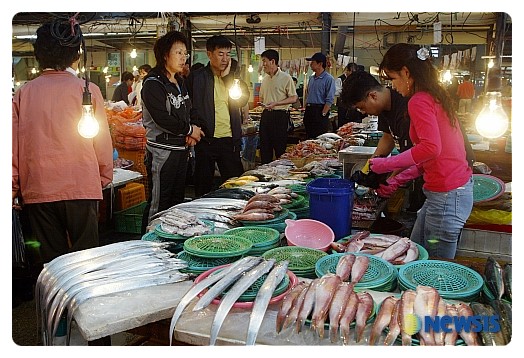
The market is not only for selling and buying products but for communicating with people in town. Every market has its own characteristics. For example, some deal with seafood, others deal with farm products. Currently, it has been modernized and improved for consumers, and delivery and customer call service became common as well. It also has a quality guarantee service. They even provide the arcade for children, stroller, and cart to young mothers to make them feel comfortable while shopping.

Transformed into Cultural Tourism Market

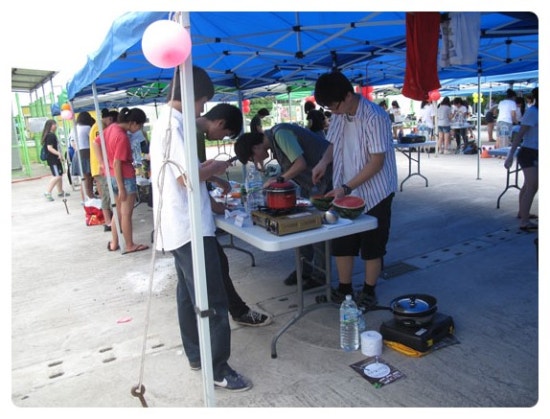
<10,000 won Cuisine Event held in five-day market in Seogypo> (Source: E2news)

Now, the five-day market became very popular with other tourist attractions in Jeju, such as ‘Olleh’ roads. As an effort to boost the economy, Seogypo market changed its name into ‘Olleh’, after then, even people from other local markets visit there for benchmarking.

Actually, Seogypo market was in depression but the atmosphere has been revived since it connected the tour business with the sixth course of Olleh. Moreover, promotion effect has been doubled after the Smalland Medium Business Administration and Market Promotion Center chose the market as one of the “50 traditional markets to go”.

According to Jeju government, the number of visitors per day increased 8,000 from 6,000. Daily sale went up to 80 million won, increasing by 20 million won. Jeju seller association has already registeredMaeil Olleh market as the trademark. With this effort, over 2,000 Olleh hikers visited to the market, which is twice as higher than that of last year.

More than 1,000 government officials and merchants have visited to benchmark Olleh market from all across the country. More Olleh hikers have come to Dongmun market as it became the 18th course of Olleh. Hanlim maeil market is connected to 14th course of Olleh, and Daejung five-day market is connected to 11th course of Olleh. Seogypo Maeil market is designated as the cultural tourism market of the year 2010 and 2011. Seomun market will soon plan to develop other Ollehcourses.

(Source : Newsis)

Meanwhile, a person concerned to the market said that DID (Digital Information Display) will be installed in sixth course of Olleh in order to provide information of food, products, hot sale events in Jeju to all visitors. They expect many of them will come to markets as well.

So, if you want to feel 100% of the culture and custom of Jeju, this is the best season. Don’t forget to bring camera!


Friday, May 20, 2011

Korean Medical Care that impressed Kazakhstan

Article picked from http://blog.naver.com/korea_brand/10109428025

Korean Medical Care that impressed Kazakhstan

At the end of last November, the medical team from the Korea University Anam Hospital flew over to Astana, the capital of Kazakhstan, and carried out the kidney transplant as officially invited by the National Medical Emergency Center of Kazakhstan. The surgery was successful, and the news on the medical techniques of the Korean medical team was aired throughout the country. Not like in Korea, the success rate of the kidney surgery in Kazakhstan is pretty low. However, the organ transplanting was the only way to save Aigerim Kumasheva suffering from the chronic renal insufficiency, so the medical team operated the surgery with her brother’s kidney, which took 8 hours in total. Dr. Kasimov, the head of the medical emergency center of Kazakhstan, appreciated at Korean medical team, saying “Our hospital deeply appreciates at Korean medical team that added a new page to the medical history of Kazakhstan. I was very impressed at their sense of duty as a doctor as well as their medical technology.” This is not the end of successful stories of Korean medical treatment. A number of tourists looking for the medical tourism are continuously visiting Korea. Let’s take a look at what is in Korean medical treatment!

Kazakhstan President’s doctor visited Korea

On April 26, one patient visited the Severance hospital in Korea and received a medical surgery. In fact, he was a lifetime doctor of Kazakhstan president Nursultan Nazarbaev and also a notable specialist in rehabilitative medicine, who was running a huge hospital in Kazakhstan. He first found the successful story of robotic surgery by the Severance hospital from the article among the data of medically advanced countries such as U.S. and European countries. He decided to visit Korea right after counseled by one of his co-workers and met an acquaintance who recovered from the surgery by the Severance hospital.

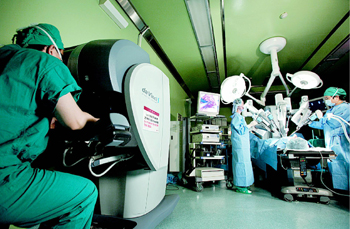
< Sitting aside with the robot called da Vinci, the doctor operates surgery with 3-D screen. The robotic arm is located inside the patient’s body> (Source : Donga News)

He chose Dr. Na, who is well-known to have performed the greatest number of robotic surgeries on prostate cancer in Korea. You will find the reason from the fact that he is the first doctor in Korea who succeeded the robotic surgery in 2005, and also performed about 1,200 surgeries so far. Of course, the result was successful. Dr. Oraz left the hospital with a healthy appearance. Like this, the technology of robotic surgery has achieved recognition throughout the world. You will be surprised to know that many doctors around the world such as U.S., Singapore, Italy, and France visited Korea to learn how to perform the robotic surgery, even paying tuition.

What is da Vinci Robotic Surgery?

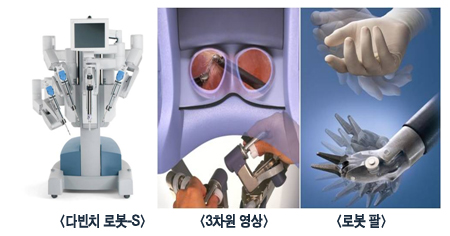
da Vinci Robot>(Source : The Center of da Vinci Robot Surgery, Hallym University Kangnam Sacred Heart Hospital)

The robotic surgery was first brought in Korea in 2005 by the Severance Hospital, and since then, it was applied in an operation room. What is the procedure of the surgery? The patient gets general anesthesia like the other surgeries. And then, the robot’s arm is inserted into the abdominal cavity of the patient after injecting the gas and inserting the port into the patients’ abdominal cavity. After then, the doctor pricks several holes for putting robotic arm and camera into his patients. Next, he controls the robot with the exactly same hand movements like he did in the real surgery, watching the 3-D screen that helps doctors take a closer look at the affected area of patient, which is absolutely beyond the human hands.

In particular, the da Vinci robotic surgery is useful to cure some cancer that might bring about a severe side effect and complications when its surrounding nerves and blood vessel are damaged, such as the prostate cancer, rectal cancer, esophageal cancer, and bladder cancer. It is indeed an effective surgery.

Oriental medicine to the world

Korea International Cooperation Agency(KOICA) and the city of Almaty, Kazakhstan made an agreement to establish the Korea-Kazakhstan friendship hospital in 2000. At that time, KOICA used to send doctors and volunteers to the department of internal medicine, dentist, clinical pathology, oriental medicine, and other various fields. Now, the city of Almaty is running the entire hospital according to the further agreement.


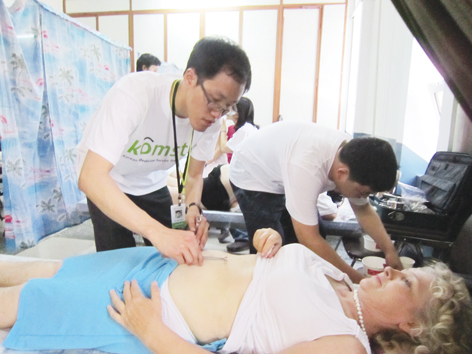
(Source : Akomnews)

Well, there is more. The Korean Medicine Service Team Abroad (KOMSTA) also performed the medical services to 1,000 residents and Korean-Kazakhstan who live in poor medical surroundings. Through the wonderful Korean traditional medical treatment such as acupuncture, moxa cautery, cupping, and oriental medicine in Kazakhstan where 100,000 Korean-Kazakhstan live, we hope that we delivered a pride to Korean-Kazakhstan, and health to those residents. Also we believe that people in Kazakhstan would have more expectations and demands to Korean traditional treatment in the future.

Recently, Korea Institute of Oriental Medicine hosted the training program on ‘Modernization of Korean traditional medicine’ from April 15 to 29 for two weeks targeting the world health care experts. The program is one of the training programs that Korea International Cooperation Agency(KOICA) offered, and in this program, total 14 foreign health care experts from 11 countries of Asia, Central and South America, and Africa, such as Cambodia, Ethiopia, Ghana, Kazakhstan, Laos, Nigeria, Sri Lanka and etc. It will be a great opportunity for the world health care experts to get handful of experience on the Korean traditional medical treatment.