Tuesday, August 31, 2010

Ever Heard of Sommeliers for Korean Food?


Ever Heard of Sommeliers for Korean Food? Know Korea / Know Korea

2010/08/26 17:45

복사http://blog.naver.com/korea_brand/10092964038

A few years back, there was a big wine boom. Wine was the trendy thing. And so was the word “sommelier.” It is a French word meaning a trained and knowledgeable wine professional who specializes in all aspects of wine service – wine procurement, storage, wine cellar rotation, providing expert service to customers and so on.
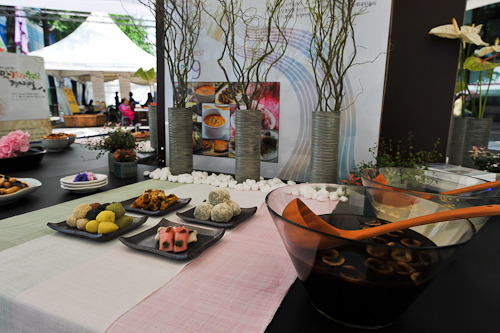


Well, you will be surprised to hear that there exist sommeliers for Korean food now. Last October the World Food Culture Center (WFCC) introduced its first sommelier course for kimchi and makgeolli in an effort to globalize hansik – traditional Korean food.
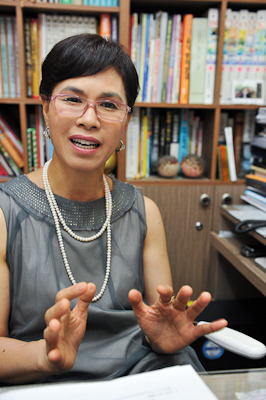
Ms. Hyang-Ja Yang, the CEO of the WFCC, commented, “Kimchi is Korea’s representative food, designated by the New York Times as one of the world’s top 5 health foods. Korean food has numerous benefits – nutrition, taste, and style-wise – and is something we can pride ourselves on.”

Ms. Yang went on to emphasize, “But we’re not making enough effort to promote and globalize hansik. There isn’t enough “story-telling” nor attempts at fusing Korean food with other food culture.”


Mr. Wan-Soo Park, Director of World Kimchi Institute (organization under the Korea Food Research Institute), said in his interview last March, “The fact that kimchi is such an ingrained item in Korean people’s lives is partly the reason why there is an insufficient amount of research on systemizing it.”

Kimchi is something that Korean people eat almost every meal, and Korean households make a load of kimchi every winter almost like a ceremony. Despite its subtlety of taste and a very storage-sensitive nature, there is hardly enough standardization of kimchi-making. Much of how-to-make-kimchi has been handed to the next generation by telling and showing without relying on set recipes. Lack of industrialized processing as well as special wrapping that accommodates fermentation and long-distance delivery has been deterring global distribution of kimchi. The same situation goes for the traditional Korean liquor, makgeolli.

Ms. Yang of the WFCC says, “A kimchi sommelier should be well-equipped with expertise on kimchi and cooking skills, and should be able to provide all kinds of information regarding the dish. The kimchi sommelier course comprises 12 classes in the span of 3 months. The course also teaches you skills that keep the wrapping from bursting while kimchi is fermenting.”
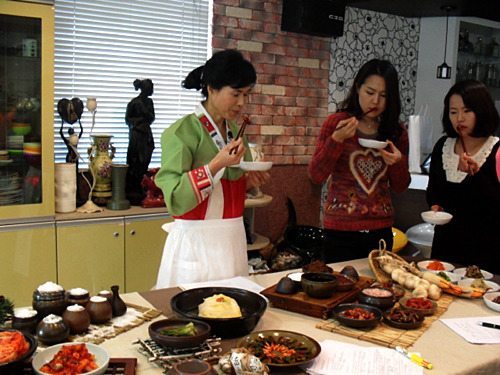
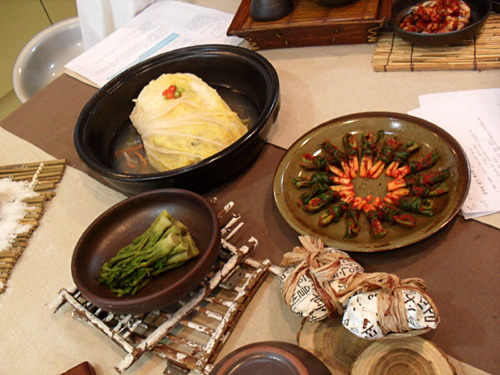


To be a good kimchi sommelier, you should be skilled not only at ensuring and preserving the quality of kimchi, but also at story-telling of kimchi. Ms. Yang says, “To do that, education on the theory of Korean food culture is essential. And with the suitable food styling we can shape the impression of Korean food as classy and elegant as well as generate value-added. Also, developing fusion dishes that blend Korean food with other food cultures will be conducive to globalizing hansik.”
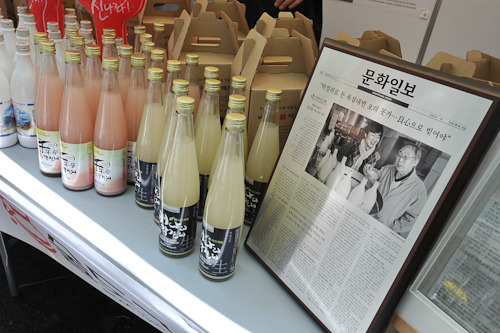
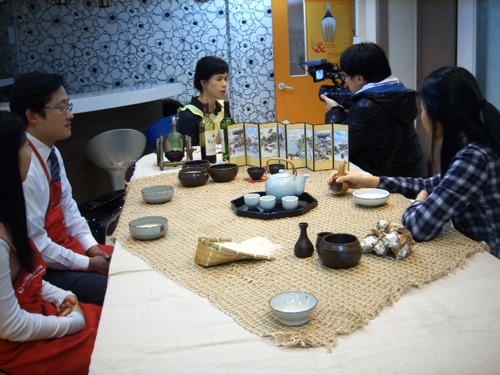


In the makgeolli sommelier course, aside from being educated on the manufacturing, preservation, styling of the liquor, you also learn about its drinking culture such as drinking etiquette or how to shake makgeolli before pouring it and so on.

“In countries like Vietnam that are familiar with rice, makgeolli is regarded as a high-class liquor. And the curry-flavored makgeolli is especially well-received in India. It has a nice color, too, style-wise. We can produce any number of variations of makgeolli that combine various countries’ specialty flavors,” Ms. Yang explained.

“Maintaining a stubborn attitude that doesn’t allow room for incorporating other food cultures won’t work. To globalize Korean food, we ought to be open-minded about and respectful of dishes of other countries. Take Japan’s sushi, for example. Sushi is now made and sold by as many Koreans, if not more, as Japanese people. For effective globalization of hansik, we should get rid of the thinking that Korean food must be made by Korean people, nobody else.”
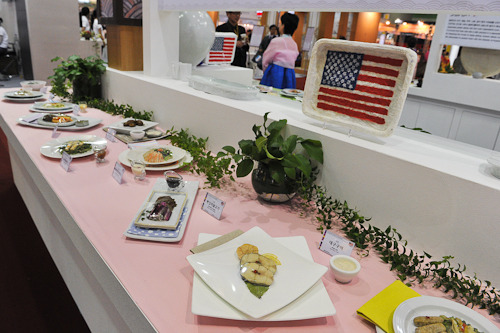

Mr. Tae-Pyong Chang, the former Minister of Food, Agriculture, Forestry and Fisheries said in his celebratory speech at the International Food Industry Exhibition Seoul 2010, “The size of the global food industry is USD 4.3 trillion, 5.6 times that of the IT Industry, and 2.5 times that of the automobile industry. It is a huge, huge market. And globally, countries are endeavoring to raise their competitiveness and take leadership in the food industry.”

Korea, too, is making efforts far and wide to promote Korean foods such as kimchi, makgeolli, and tteokbokki. For makgeolli, in particular, the goal has been set at USD 10 million volume of export for this year.

“If people get to be familiar enough with variations of Korean food, then they will eventually want to delve deeper and trace back to the food culture in its original. That will stimulate export of Korean food ingredients as well as attract foreign visitors. And by offering hansik sommelier courses, more Korean people will get to be well-versed in expert knowledge of Korean food, which I believe will contribute to the sustainable development of Korean food culture,” Ms. Yang says.


Saturday, July 31, 2010

The “Ethernet” Technology

Article picked from http://blog.naver.com/korea_brand/10091063062

The “Ethernet” Technology Know Korea / Know Korea

2010/07/28 12:58

복사http://blog.naver.com/korea_brand/10091063062


Have you heard of the term “Ethernet?” Not Internet, mind you, but Ethernet. Well, I suppose it’s not exactly in our everyday vocab list.

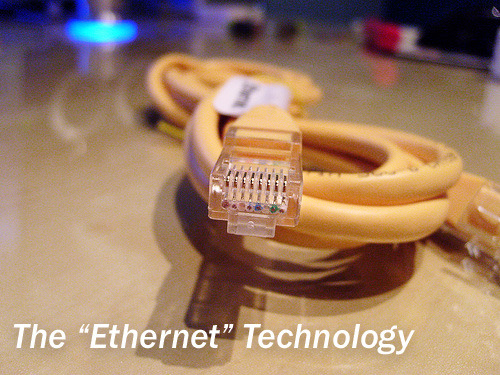
Ethernet, stemming from the physical concept of the “ether,” refers to the computer networking technologies for local area networks (LANs). In simpler words, it is a system where multiple computers scattered far and wide can form a network and share information. This system is widely used in the banking or trading industry that operates hundreds of branch stores.

Traditionally, the Ethernet market has been dominated by advanced countries such as the US, Japan, and Germany. But recently, Korean industrial Ethernet technology has been adopted as an international standard, marking a milestone for advancing into the world market.

Let’s learn a bit about this Korean Ethernet technology.

Faster and Easier to Fix

According to the Ministry of Knowledge Economy of Korea, the International Electrotechnical Commission (IEC) approved of 5 RAPIEnet (Real-time Automation Protocols for Industrial Ethernet) technologies developed by Korea’s LS Industrial Systems. They passed the Final Draft International Standard (FDIS), which means that it is almost at its last step in becoming the international standard (IS).


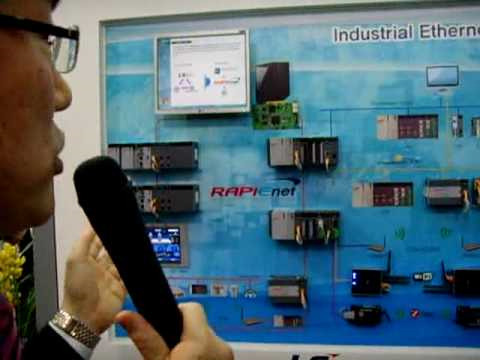
LS Industrial Systems has developed RAPIEnet as a new industrial communications bus for use with its PLC (Power Line Communication) systems. The company says that in so doing the design has avoided the complications of hubs and switches and the accompanying excessive cabling required by established Ethernet technology.

RAPIEnet, while still compatible with the preexistent Ethernet standards, transmits data at a 1 GB-per-second speed and in case of a communications failure can repair the error 30 times as faster. It can be utilized in a variety of fields operated by automation systems such as semi-conductor and automobile manufacturing, or nuclear energy development.

Korea, the Forerunner of the Industrial Automation Technology

RAPIEnet is the fruit of the collaborative efforts between LS Industrial Systems and Hanyang University – corporation and academia. The volume of tangible and intangible profit generated by this technology’s approval as an international standard is incredibly huge. It laid the groundwork for Korea to advance into the global market of USD 10 billion’s scale. Also, the domestic market, worth of KRW 150 billion, which has so far been dominated by the USA, Germany, and Japan, is expected to be finally claimed back by the Korean technology.

It is also important to note the significance of the collaborative R&D efforts between corporations and schools, backed up by the government support. Korea will surely continue its endeavors to generate world-acknowledged brand-new technologies.

Spend the Summer at the Royal Palace

Article picked from http://blog.naver.com/korea_brand/10091062960

Spend the Summer at the Royal Palace Know Korea / Know Korea

2010/07/28 12:57

복사http://blog.naver.com/korea_brand/10091062960


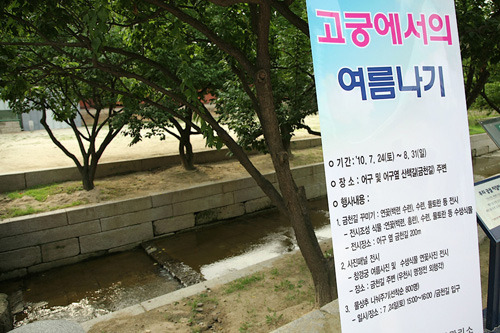
An event titled “Spending the Summer at the Royal Palace” is being held from July 24 through August 31 at Changgyeonggung Palace. Let me introduce it to you.

Upon entering the palace you will be able to see a banner in front of euhgoo (a stream flowing from a royal place) that traverses the palace.


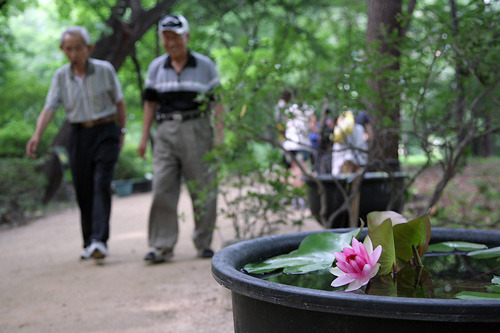
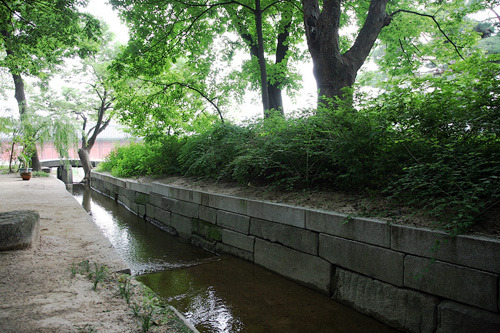
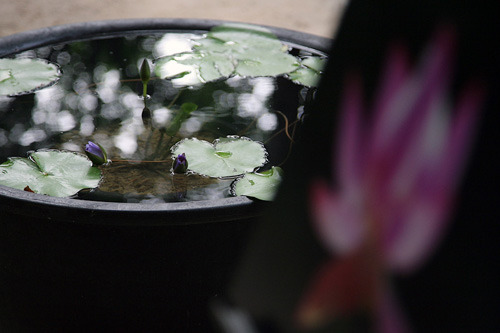
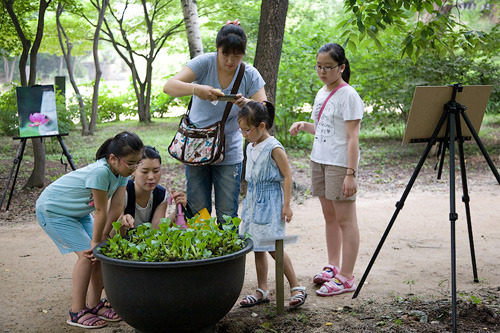
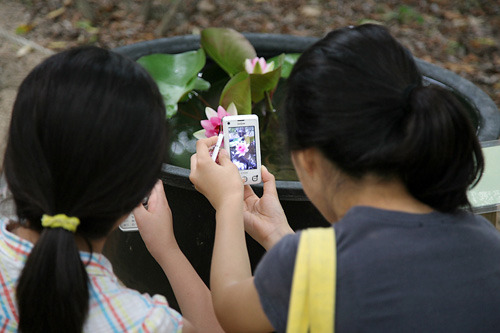
The clear stream euhgoo flows along Geumcheon path with pleasant, gurgling sounds, and you can take a rest in the shades drawn by the lush trees planted along the path. The path is also adorned with a variety of aquatic plants such as lotuses and water lilies as well as twenty-some photographs.


<Euhgoo flowing along Geumcheon path>


You can spot friends, lovers, families here and there, as well as foreigners visiting Korea. There are kids on a field-trip with the assignment to observe water lilies and hyacinths. There are members of a photography club on an outing. The various aquatic plants with their beautiful features and purifying qualities grab people’s attention for a long time.


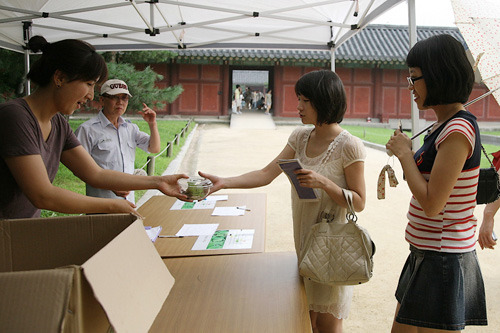
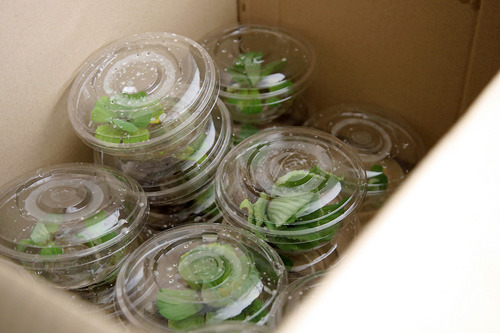
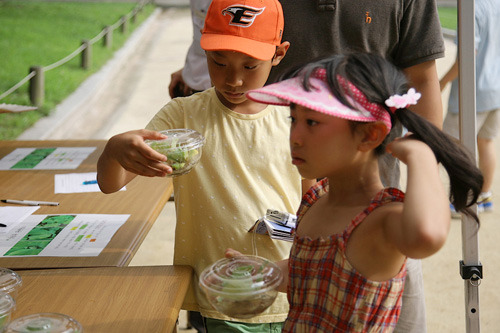
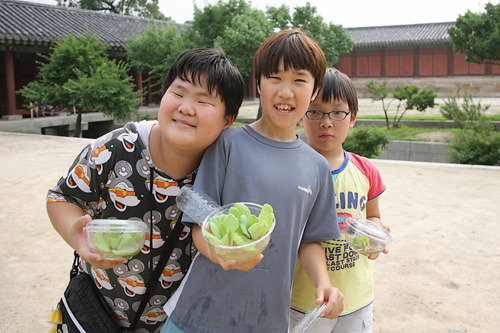
On the first day of the event, water lettuces known for their pollutant-fighting, purifying capacity were given out as a souvenir.


In the olden times, there were purported to be 8 ways of fighting the heat of the summer. According to Jeong Yak-Yong, a leading Korean philosopher in the late Joseon Dynasty, the 8 ways were :

1) Playing Baduk sitting on a cool bamboo mat
2) Practicing archery on a platform of pine trees
3) Playing the traditional Korean game of Tuho (throwing arrows into a jar)
4) Riding swings in the shade of a zelkova tree
5) Listening to the cry of cicadas in the forest
6) Writing poems on a rainy day
7) Washing feet in the moonlit night


How about trying a little vacation at Changgyeonggung palace, hmm?
Give it a try!

Thursday, July 15, 2010

Saving the Earth with Electric Buses

Saving the Earth with Electric Buses
Downsides of driving a car?
Yes, there is the price of gas that never seems to skyrocket.

But on a bigger scale, there are more fundamentally worrisome issues: Climate change and the drainage of natural resources, especially the fossil fuels.

In respond to this environmental crisis, the international community has been taking actions. One of the measures widely initiated by the countries worldwide is reduction of carbon emissions. And naturally, the automobile industry is tightly linked with that.

Ever heard of environment-friendly electric vehicles (EV)?

Among the possible future environment-friendly vehicles, electric vehicles are taking the central stage. Many countries in the forefront of the automobile industry, including the U.S. and Japan, not to mention European countries, have declared their resolutions to manufacture 1 million electric vehicles.

Since electric vehicles run on electric batteries and motors instead of the traditional fossil fuels, they are drawing particular attention and interest nowadays that the regulations on exhaust emissions are becoming increasingly strict.

And Korea is not an exception in this “green growth” trend.

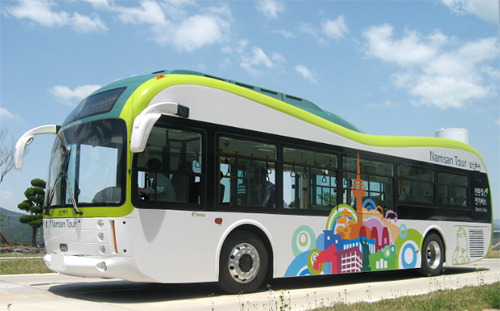
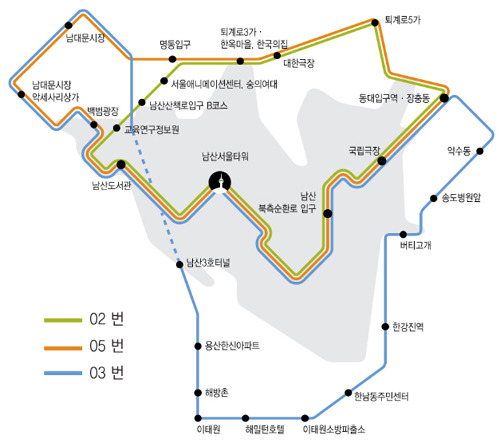
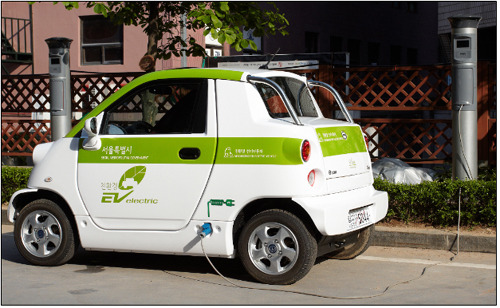
Beginning this November, the Seoul Metropolitan Government will begin the operation of 15 environment-friendly electric buses which emit absolutely no air pollution. At the moment the buses are having pilot runs since last June 21 in the Namsan circular route.


Electric buses run purely on electricity. Since they have no gas exhaust outlet, they do not emit fine dust particles, smoke, or other air pollution agents, nor do they discharge greenhouse gases such as carbon dioxide like diesel buses. They don’t even emit heat and gaseous particles that are emitted by CNG (compressed natural gas) buses. So no doubt they are considered as an environment-friendly means of public transportation for the future. And they are expected to create more pleasant road and living environment conditions.

How are their functions?

The new electric buses boast the world’s best recharging capabilities, taking only 20 minutes to recharge. The high capacity batteries enable the buses to run for 120 km after recharging once and reach a maximum speed of 100km/h. The main components of the electric buses such as the battery, motor, inverter etc. were all developed using Korean technology.


<15>

The 15 buses will begin operating in the Namsan circular route – one of the more challenging routes in downtown Seoul and an area frequented by tourists. The new buses will be yet another attraction in one of Seoul’s main hot spots, Namsan. The exterior of the buses were designed to blend with Namsan’s scenic natural environment. Also, different designs such as Haechi, Seoul’s official color, and the Seoul logo, give the buses a “Seoul identity.”

The Seoul Metropolitan Government will start expanding the operation of these buses starting next year so that 3,800 buses – or the equivalent of half of Seoul’s bus fleet – will be electric buses by 2020. The remaining buses will be replaced by hybrid buses, thus completing the green revolution of Seoul’s public transportation system.

If Seoul meets its goal by 2020, even when considering greenhouse gases emitted by the power plant producing electricity, more than 40 tons of greenhouse gases can be reduced per bus in a year, adding up to 140,000 tons every year by 2020. Also, 800 tons of nitrogen oxide and 350 tons of hydrocarbons emitted every year in the city will no longer be emitted.


By 2020, half of Seoul’s buses will be replaced by environment-friendly electric vehicles. And Seoul plans to build an electric car recharging infrastructure that is unparalleled by other cities to ensure the effective supply of electric vehicles.

All about Makgeolli (Korean Rice Wine)

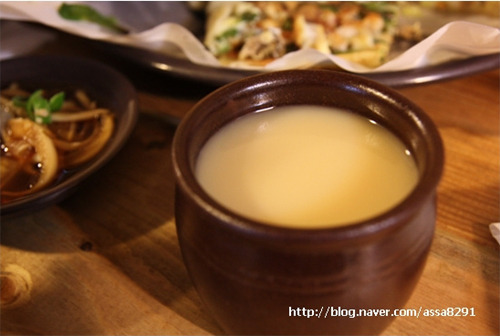
The milky, off-white color….the deep, slightly bitter, mouth-watering taste…and the sweet finishing flavor….

Guess what it is?
Yes, indeed, we are talking about “makgeolli” here, one of Korea’s representative traditional alcoholic beverages.

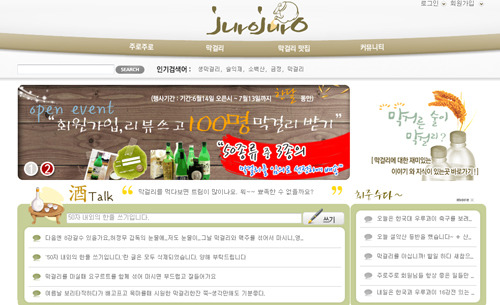
In line with the recent makgeolli boom, the first web site devoted solely to makgeolli (http://www.jurojuro.com) has been launched by the Ministry of Food, Agriculture, Forestry and Fisheries and the Korea Rice Foodstuffs Association.

“Juro” here refers to the journey of finding makgeolli and other tasty food along the road. It can also mean the longish table for placing liquor glasses, and by extension, the talk, laughter, and mingling among people taking place over a bowl of makgeolli.

http://www.jurojuro.com>


According to the Ministry of Food, this year’s makgeolli market is estimated to be around USD 550 million worth of scale. And 60% of the market nation-wide is dominated by a handful of major makgeolli manufactures, while for the capital region, as much as 70% is taken up by them.

The fact is that smaller, lesser-known, local makgeolli companies are losing ground in the competition with the giant companies. In case of Gyeonggi-do area, for instance, all 40 companies but for mere two or three are facing a drop in sales ever since the makgeolli boom.

So the Ministry of Food decided to open the above-mentioned web site to introduce and promote small and medium-sized makgeolli manufacturers that each have their own distinct color and flavor.

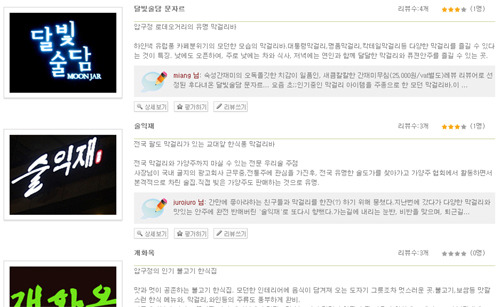
The web site’s two main themes are makgeolli and makgeolli side-dishes. There is a “Navigation” section where you can search for various types of makgeolli either according to its region or characteristics, as well as view customer reviews and experts analyses. There is also the “Liquor Talk” section where the visitors of the web site engage in free chats.

But I’d say the highlight of the site is the “makgeolli side-dishes” page, which introduces places that have the best dishes to go with makgeolli. Just by looking at the pictures of all kinds of “anjoo (dishes served with liquor),” your mouth will start watering!


There are around 700 makgeolli manufacturers throughout Korea, and as in the case of wine, each region boasts its own distinct flavor. On the web site, you can search for specific kinds of makgeolli that you want – whether it’s live makgeolli or sterilized makgeolli, or whether it’s made with Korean rice, exported rice, or flour etc. So you can pick and choose a makgeolli that just suits your taste.


Drinking makgeolli the right way?

Makgeolli tastes best when you stir it. Some people wait a while after pouring the liquor and just sip at the clear upper layer, saying it tastes crisp and clean that way, but then you’re missing out on the very gist of makgeolli. All the healthy parts – the yeast, lactic-acid bacteria, vitamin, fiber etc – are found in the sediment part that sinks to the bottom of your makgeolli bowl. So don’t forget to stir it!


The whiter makgeolli, the better?

Nope, that’s not true. The difference in color comes from different varieties of yeast. The Japanese-style rice yeast is closer to white in color, while wheat yeast, which is made in a typical Korean style, is somewhat yellowish in color. Rice yeast gives out a clear, simple taste and wheat yeast a richer and heavier taste. The choice is up to you.

Another tip: Sterilized makgeolli was made to enjoy the scent so it is best to keep it at around 5–10 degrees Celsius. In contrast, draught (live) makgeolli is made to savor the refreshing feeling of a carbonated drink, and so needs to be kept around 0–5 degrees Celsius.
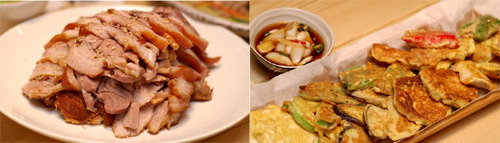
Side dishes that go especially well with makgeolli? Among hundreds, I’d go for “jeon (Korean pancakes)” and “jokbal (pig’s feet)”!


The recent makgeolli boom is also in keeping with the Korean government’s efforts to globalize hansik (Korean cuisine) as well as to increase rice consumption.

And I hope the newly launched web site “www.jurojuro.com” plays its part as a tool to spread makgeolli culture to people both at home and abroad!


Sunday, June 13, 2010

More on South Korea First Match in 2010 World Cup

Continue on previous post


Continue on previous post

Korea's First Match in World Cup 2010


Date: 12 Jun 2010 (Sat)

Time: 2030 (Korean time); 2130 (Msian Time)

Venue: 1) Photos taken at Seoul
2) Host country: Msia's forefather, the former Land of Apartheid

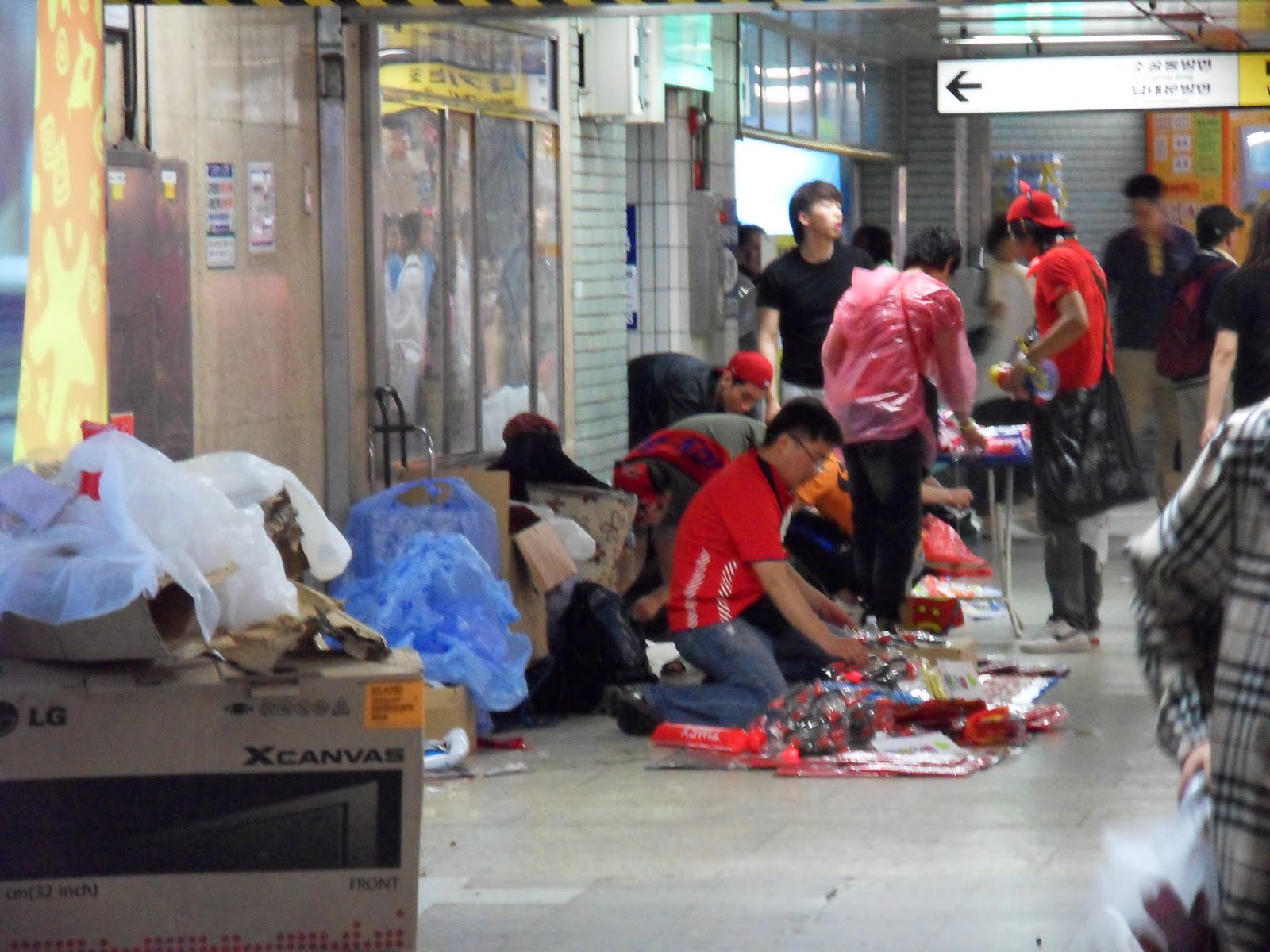
Went to Seoul City Hall yesterday to watch the first 2010 world cup match for S. Korea. They played against Greece. The bet ratio is 50:50 (courtesy of my former form-6 class monitor, keke).

Although it is exam season now, i cant help but to get my ass out for some fresh air to kill off the drowsy mood of the rainy Saturday. Plus this match will be the best time for me to get a glimpse of how Koreans cheer for their country. It's a whole new experience for a kampung boy like me who only get to cheers for his beloved country at Thomas Cup and Olympic badminton in world arena at most.

This first match of S.Korea was placed at the best time on Saturday nite. The rest of the 2nd and 3rd game were scheduled to be in the midnite. So, not much for me to get out from the scenes and cheers during my sleeping time i guess. Did not dare to ask other friends to join me during this exam season except one who i tot was a football maniac. At the end, the maniac turned out to be wise enuff not to join me for the fear of not have enuff study and flunk 5 of the exams next week.

Travelling and doing things alone are always enjoyable as I get to go wherever i like, change my plan easily, get to meet new ppl and observe my surrounding more sharply (dont forget that i still have the instinct of being an agent; well trained since my previous job in CIA~~).

I was lucky enuff to see the crowd's responds during the first goal around 7 minutes before i left the City Hall field. Again, was lucky enuff to see S.Korea's 2nd goal in the school hall. The view of the match was better compared to the City Hall which were too crowded and messy. S.Korea won Greece with 2-0. Everyone was so happy as well as the pub owners. Yeah, the pub in Sinchon will have good business even in the exam season, thanks to the match.

I was happy for S, Korea too, but it would be better if Msia is competing in S.Africa too. Can you believe Msia was on par with S.Korea and even once defeated this Asian Football Giant to proceed to the 1972 Olympic in Munich, Germany? Too bad, S.Korea survived and last but Msia has been dropping in the world sport arena as well as its economy. FIFA released the latest Coca Cola World Rankings: S. Korea at 47th and Msia at 146th. My primary school mathematics apply here, 99 place behind. What a joke! All thanks to corruption and match-fixing scandals.

Alas, welcome to Msia, where corruption is well accepted and the Anti-Corruption Commission (MACC) has not been working for the ppl but they work side by side with the current corrupted-government covering their shit. My good friend during uni time was found dead under the MACC building last year, one day before his wedding. He worked for the opposition party and was summoned for an investigation by the MACC for a case accusing the party for misusing a very small amount of state fund, which amounted to RM2000 (OMG! less than 600 USD, not even a single tip of % of the amount received by some big fish in the ruling parties and their cronies). I certainly do not believe my friend will jump from the MACC building, suicided himself ; these must have something to do with the MACC who held the investigation on him till midnite. No CCTV was recorded. Funny!

Wow! Surprisingly, Msia's standing is not that bad in the world corruption perception index, ranking at 56th behind S. Korea (39th) and of course Singapore (3rd) in 2009. Am i wrong about my country being too corrupt? But what i know is my friends corrupted the traffic police. Once i was instructed to hand the monthly 'fee' to the KL city hall staff who came to my previous work site by his bike. If not paid, they have all sorts of power and excuses to summon you ranging from cleanliness and public hazards which are very subjective.

My Japanese friend was was requested bribery money from a custom officer when he came into Msia from Singapore. Eventually, he bribe the officer but jotted down the name of that officer. He reported the bribery case to the head quarter of MACC and so coincidently it was the same day that my politician friend mentioned above was found died under the MACC building! My uncle's truck have to pay 'protection fee' to the traffic police for not giving problem to them on some quibble matters. Believe me, you pay differently for different districts and federal route. The more rules the government setup, if not being study properly, will serve as a fertile ground for corruption during the execution.

I'm not sure if i will be charged under the sedition act or any other internal security act for this posting but if it is surfaced, my posting will have fulfill its mission ~~~


Ok, time to watch football!


Thursday, June 10, 2010

Missed Iran and the Persian Kingdom


Passed-by a blog posting the news of Iranian women being blamed for the earthquake in Iran which caught my attention.

Got an Iranian fren named Behrang who is working in KL. Yes, Behrang as in the Behrang in Perak. Went travel with him back to Iran in April 2008 and found that most of the Iranians are really friendly. They will stop you half way on the road, talk to you, ask how you think about their country and some will even invite you to be their guest at home.

Maybe Behrang is from an upper-middle class in Iran. He brought me and another Msian fren of mine to visit his relatives and friends. Their house are nicer than mine in Msia, all look good inside. It's Iranian custom to visit their relatives and frenz who never met for some time especially after coming back from oversea. The relatives and friends will also visit him back in some time later. Thats why i was confused seeing the same ppl in Tehran (Behrang's aunt's place) and Now Shar (Behrang's home some 4 hrs from Tehran). The bub-bye made when we last met at in Tehran did not last a week.

One funny thing is that they seldom see East Asian in Iran. When Behrang's daddy sent their oven for repair at a SAMSUNG service center, the manager tot we were from SAMSUNG Korea on purpose of non-formal inspection to them. Haha! The outcome was that the oven was repaired in the fastest time in two working days and no problems till now according to Behrang. Haha! Guess i will make a better role now that i can speak Korean. Keke!

Iranian family usually serve fruits and nuts in their living room, completed with small knives. They are good in peeling fruits. Even a young boy can beat me in that! I've learned a good way in peeling the fruits especially oranges and kiwis. Teach you next time. Oh, i saw triple-shape kiwis too.

The only problem was the food. Iranian like sour and sweet. From lemon to yogurt and other dishes, all not my type except the barbecue chicken! The rice is soft, long and not sticky. Once i was sooooooooooo interested in a dish which looks like curry chicken. Too bad, it turned out to be sour-tomato chicken and not a single salty or spicy got into my tongue. Luckily i am now temporary residing in Korea where the foods suit my picky Asian tongue.

Also visited Persepolis, an ancient city of Persian Kingdom; also a UNESCO World Heritage megalith near Shiraz. Never heard of it before i went to Iran. Should i blame the press? Met some university students there and visited their living place. Then i saw the real life of Iranian ppl. Six students staying in a little room. Just double decker beds; no table for study or other fancy computer desks. They told me that they can study in the school library.

Before the formation of Iran into an Islamic Republic, the ppl live in a more liberal way since 1940's until they tumbled their bad Sultan (King) and given a rise to an Islamic party. Thats why my Iranian fren remind me not to vote for PAS, the Islamic Party in Msia. I think the case is diff in Msia cox not all citizens are Muslims. The Islamic party will do some good but not when i gets the full power of the country. Men are same, no matter how you represent God and how clean you claim you are, the dirts will grow when it comes to power. How right is to relate the religion to the politics of the country? The president of Iran has to be recommended and shortlisted by a group of religion leaders behind the backdrop. President Mahmoud Ahmadinejad's balls were half hold by the religion leaders. I see President Ahmadinejad as a good friend to the bloody Kim Jung-il in North Korea. Too bad....the protest and move to change the republic government early this year did not success.

All and all, there are still a huge number of Iranians who are really open minded but too weak to fight back the gov which is holding the military power. I got a taste on the first vodka (Illegal) of my life in Iran. The vodka was smuggled from Russia thru the Caspian sea, the largest lake in the world but has become salty. I cant even see the other side of the Caspian sea while i'm in Now Shar. The Iranian girls are really pretty and attractive. They wear singlet a home! I would fall in love with them if not because the religion barrier.

Got some photo albums in facebook. Feel free to visit http://www.facebook.com/photos.php?&id=634602661&s=60&hash=6e9cb85cd61f18fb6b0ccc450d005f02#!/album.php?aid=23383&id=634602661&op=60

^^